· Adam Rizzo
Forearm exercises: the complete guide, equipment optional
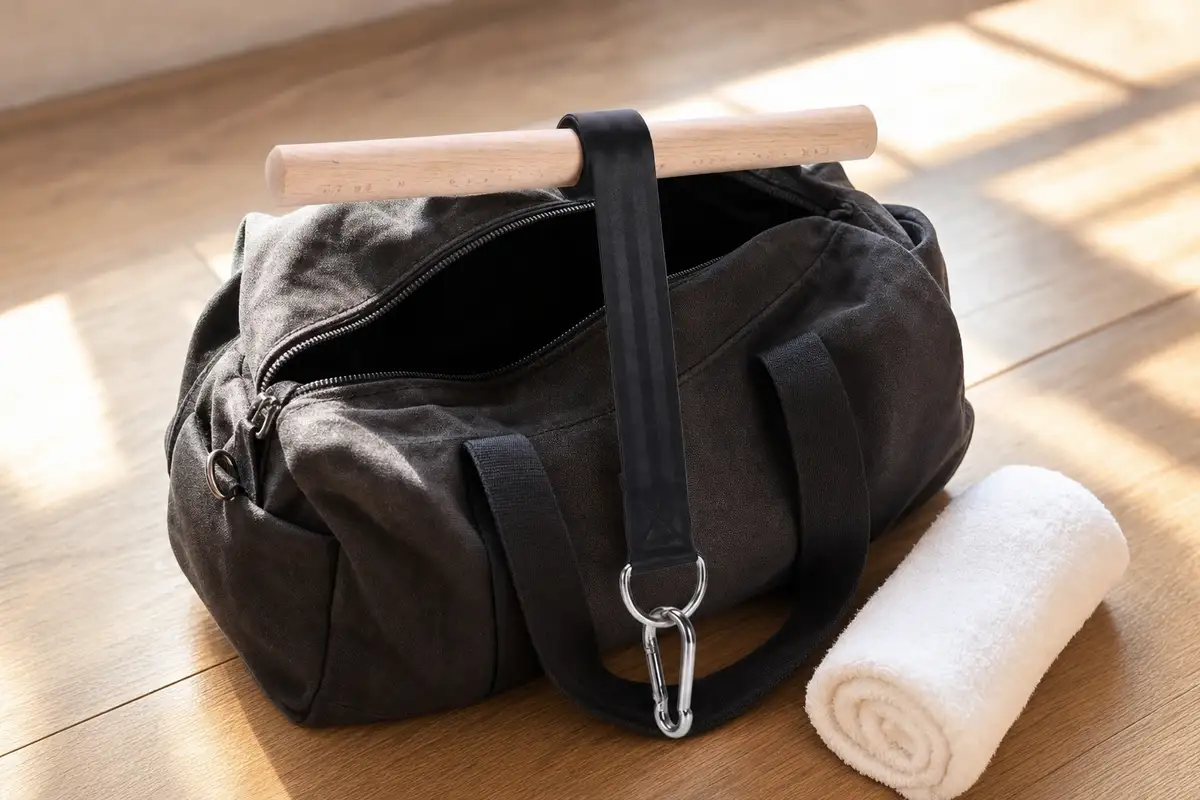
Forearm training suffers from list inflation: fifty-exercise roundups where forty entries are the same curl holding different objects. The truth is more compact. There are five movement patterns, each with a bodyweight version and a loaded version, and a plan only needs one exercise per pattern. Here is the whole map.
Pattern 1: rolling
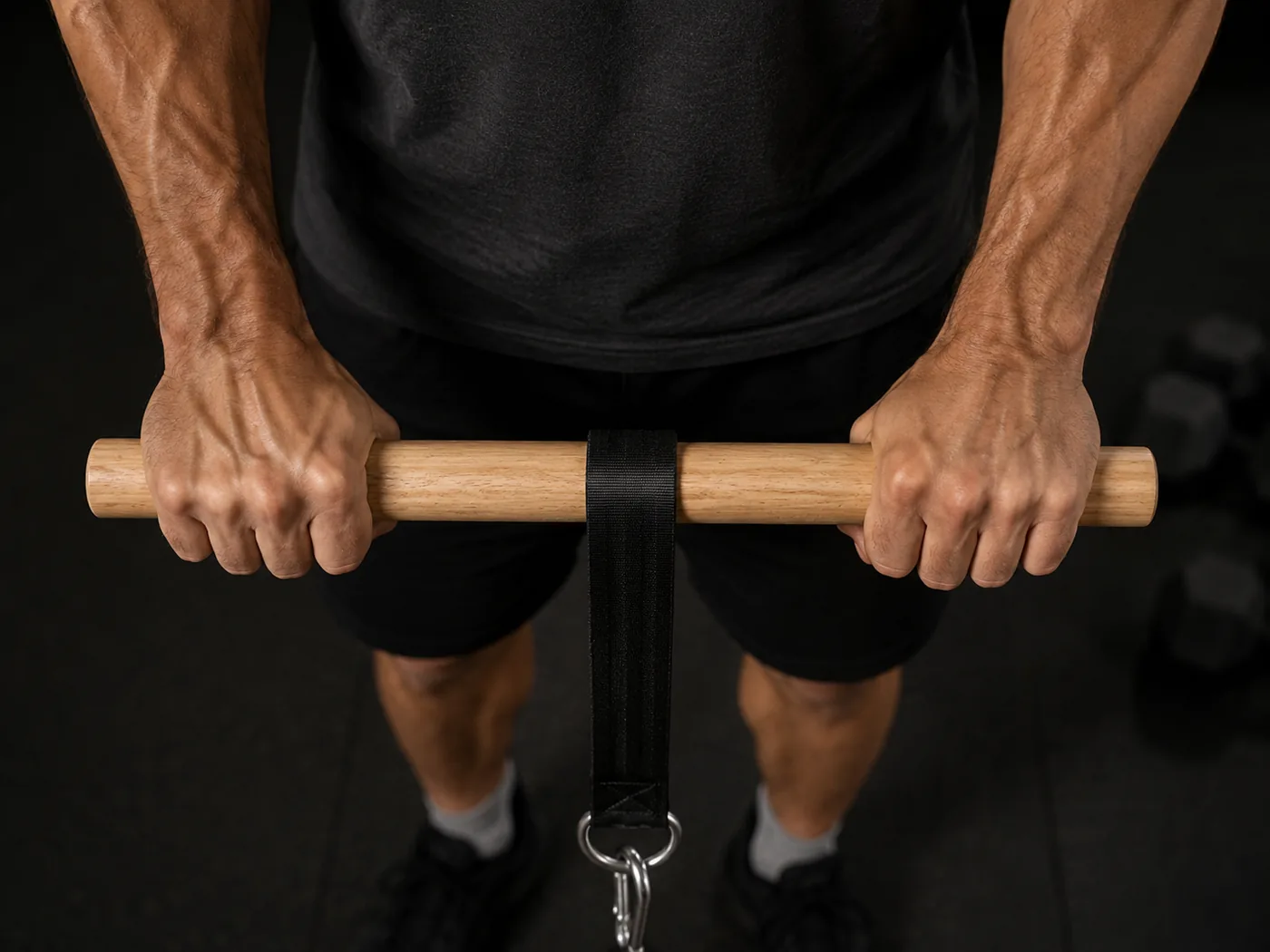
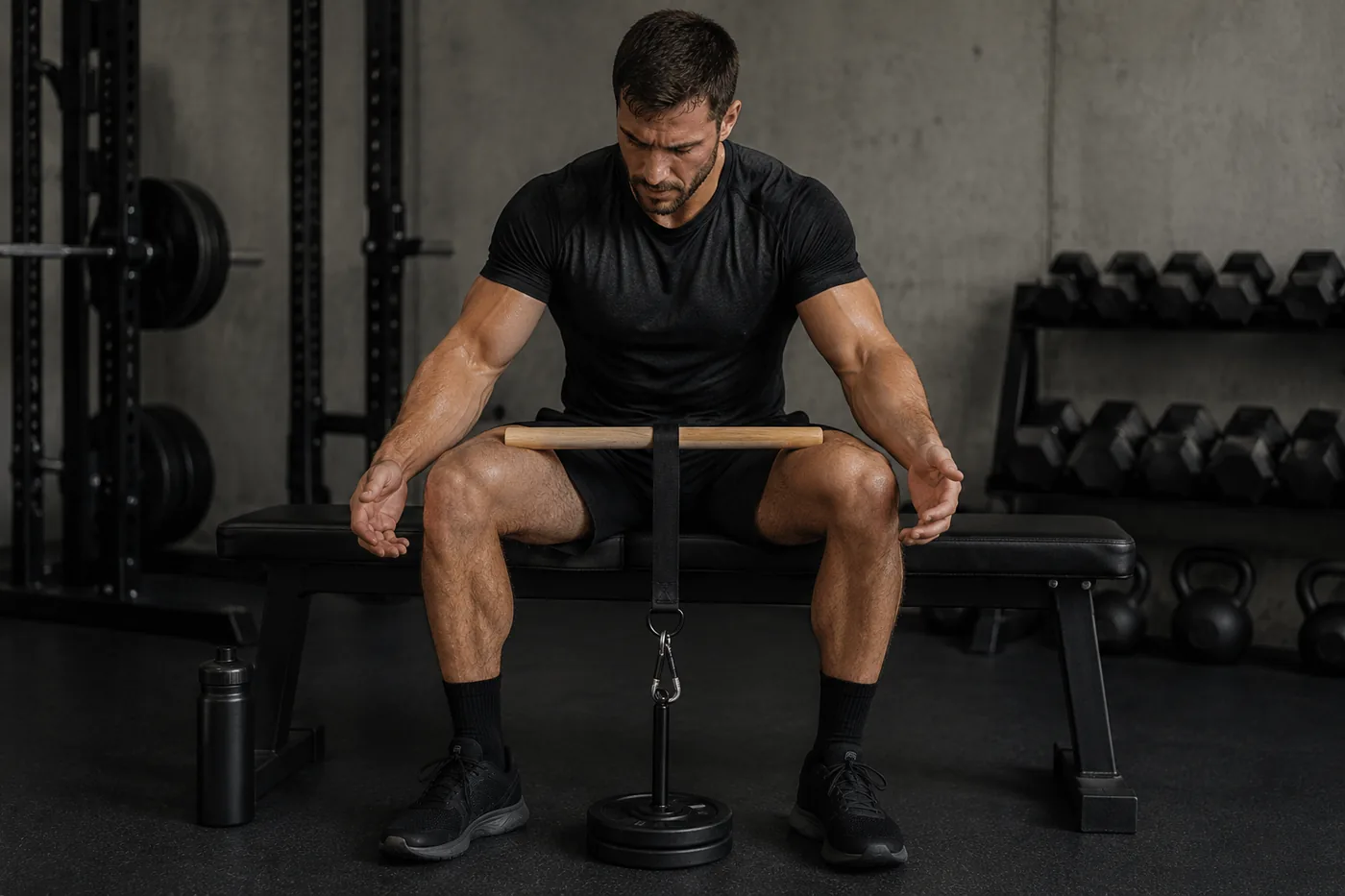
The signature forearm movement, and the only one that trains flexion, extension and grip endurance in a single set. The tool version is the wrist roller: wind a hanging weight up, lower it slowly, alternate palm directions. The no-equipment version is towel winding, rolling a twisted towel tight from end to end, which teaches the motion but runs out of resistance quickly. Rolling earns the anchor spot in any forearm plan, and the routines here program it properly.
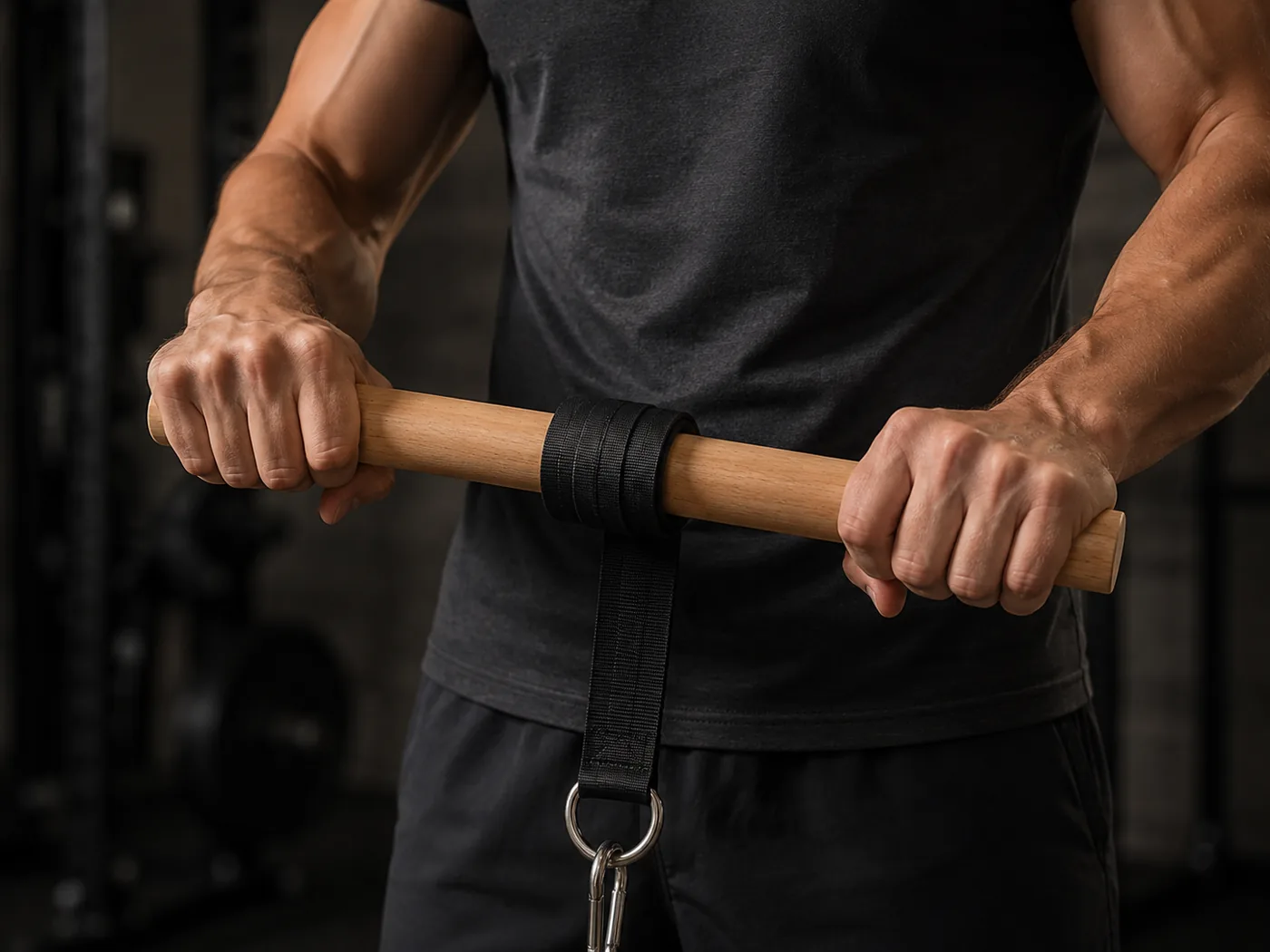
Pattern 2: curling
Wrist curls (palms up) and reverse wrist curls (palms down) over a bench or your knees, with a bar or dumbbells. This is the heavy strength pattern: short range, big loads, sets of 8 to 15. If you own no weights, a filled water jug or a resistance band under your foot does the young version of the same job. The roller vs curl bar comparison covers how these two patterns divide the work.
Pattern 3: hanging
Dead hangs from a pull-up bar train supporting grip and decompress the shoulders at the same time. Start with both feet assisting if a full hang is short-lived, progress to timed hangs, then to towel hangs, which force the crushing grip to work overtime. No bar at home means this pattern waits for the gym, but it costs nothing where a bar exists.
Pattern 4: carrying
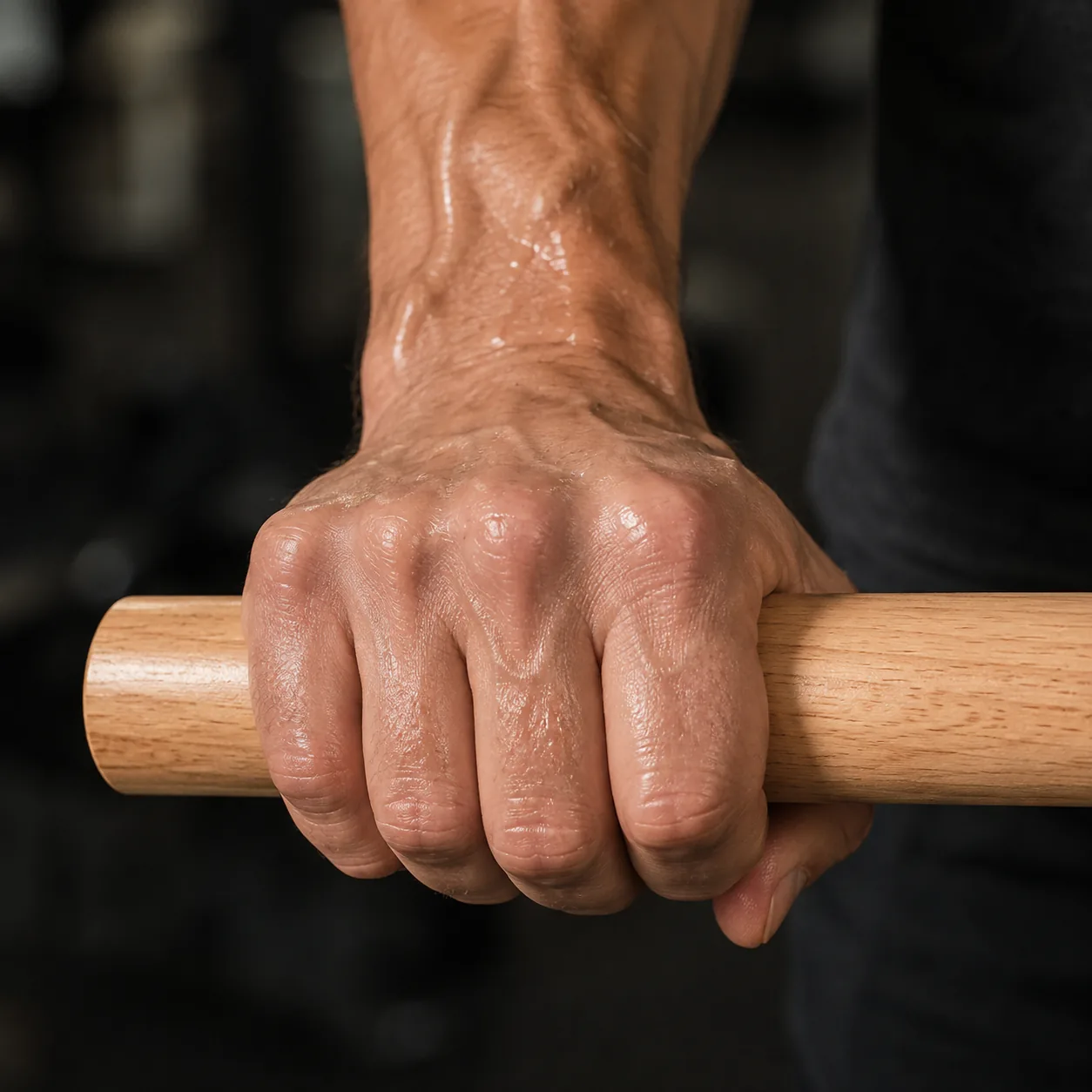
Farmer carries with anything heavy: dumbbells, kettlebells, loaded shopping bags, a loading pin held by the ring for timed holds. Carries look basic, and they are the most life-transferable grip work there is. Grip is worth that attention beyond aesthetics: in the PURE study of 139,691 adults across 17 countries (The Lancet, 2015), every 5 kg (11 lb) decrease in grip strength was associated with a 16% higher all-cause mortality risk, and grip predicted cardiovascular outcomes better than systolic blood pressure.
Pattern 5: extending
The forgotten one. Finger extension against a rubber band around the fingertips, or reverse curls, balances thousands of daily gripping reps. Extension work is cheap insurance for cranky elbows and the pattern most desk workers need most. Thirty slow band openings a day is a complete prescription.
The weekly plan, three tiers
| Setup | Session A | Session B |
|---|---|---|
| No equipment | Towel winding + dead hangs | Carries with bags + band extensions |
| Roller only ($29.95) | Roller routine, palms down + up | Backpack carries + band extensions |
| Roller + pin + plates | Roller hypertrophy routine | Pin carries + hangs + extensions |
Two sessions a week is the deliberate choice, not a compromise. It matches the minimum 2 muscle-strengthening days per week in the U.S. Physical Activity Guidelines (HHS, 2018), it leaves recovery room for tendons that adapt slower than muscle, and it is a schedule people actually keep. Ten minutes, twice a week, five patterns covered.
What to do first
If you own nothing: hangs, carries and band extensions this week. If you are ready for one purchase, the roller replaces the most exercises per dollar, and the loading guide shows how to feed it with weights you may already own. Start where you are, and let your grip stop being the excuse.
One last calibration note: soreness in the forearms arrives late and leaves slowly, so judge your first two weeks by controlled reps rather than by how wrecked you feel the next morning. If your grip is still tired when the next session comes around, take another rest day without guilt. The five patterns will still be here, and the tendons you spare in month one are the ones that let you train hard in month six.