
· Adam Rizzo
Wrist roller benefits: muscles worked and what actually improves
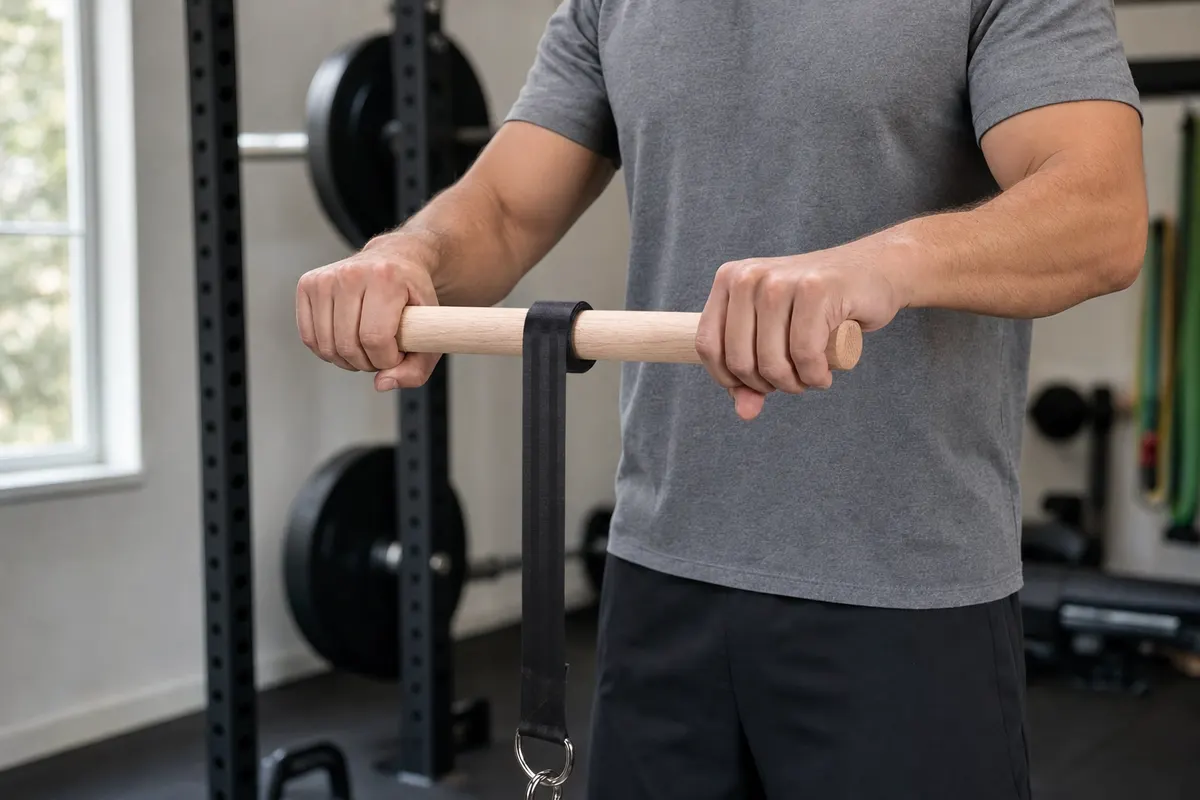
Every grip tool has a sales pitch. The wrist roller's pitch survives contact with anatomy, which is why a tool this old is still in every serious grip athlete's kit. Here is what it trains, muscle by muscle, and which benefits are real versus recycled marketing.
The muscles, mapped to the movement
| Muscle group | Where it is | When it fires on the roller |
|---|---|---|
| Wrist and finger flexors | Inside of the forearm | Rolling the weight up, palms down, and every grip closure |
| Wrist and finger extensors | Top of the forearm | Lifting the knuckles each rotation, controlling the unwind |
| Brachioradialis | Thumb side, near the elbow | Stabilizing the elbow with the arm half-bent |
| Hand and thumb muscles | Palm and thumb pad | Continuous bar grip, re-gripping every rotation |
| Front delts (bonus, optional) | Shoulders | Only in the arms-extended position |
The detail that separates rolling from wrist curls is the extensor work. Curls train the mirror muscles on the inside of the forearm and mostly skip the top. The roller cannot skip it: every rotation demands active extension, and the slow unwind loads it eccentrically. That balance matters for how the forearm looks and for how the wrist tolerates pressing, front-racking and typing.
Benefit 1: forearm size you can see
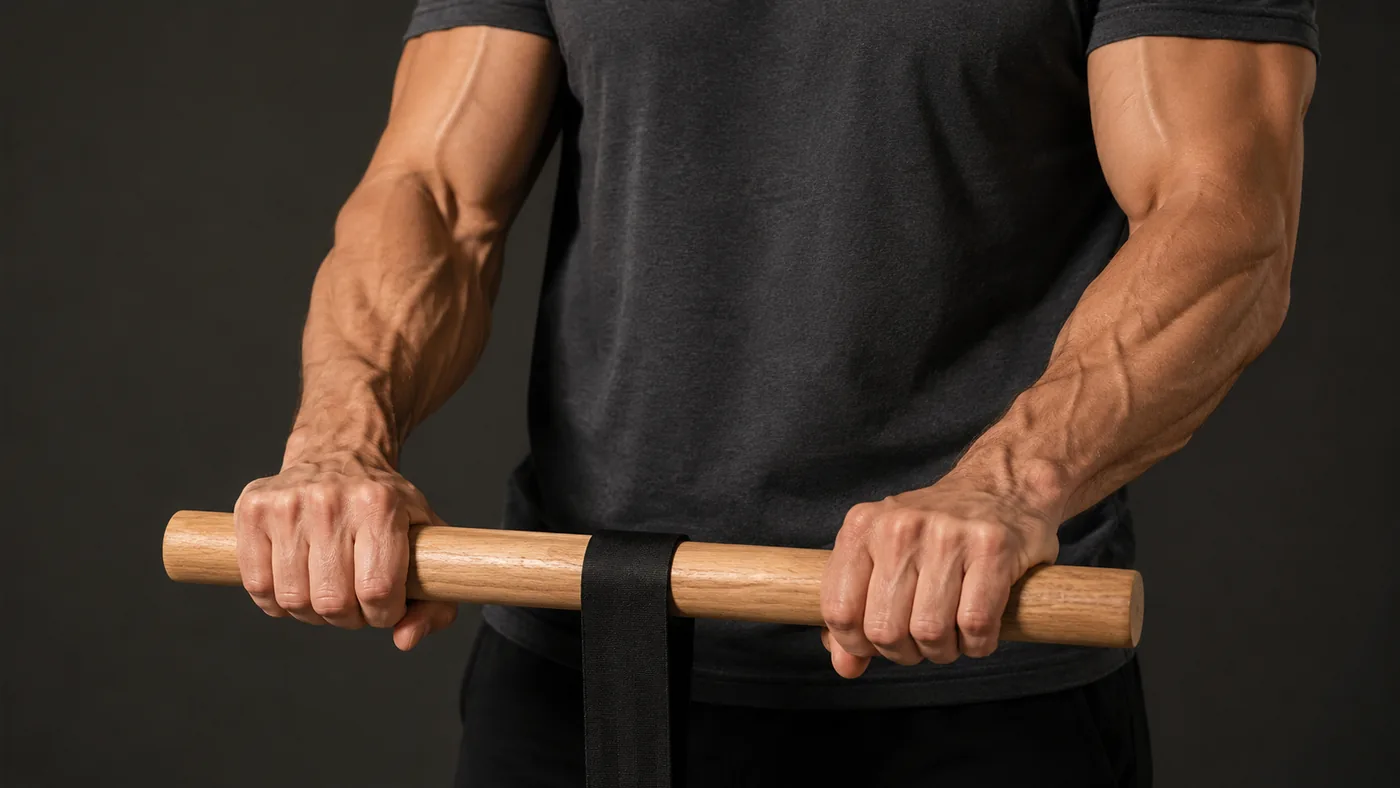
Forearm muscles are small, but they respond to time under tension, and rolling is nearly all time under tension. A single trip up and down keeps the muscles contracting for 30 to 60 seconds without a resting point. Run the hypertrophy routine twice a week with progressive load and the change shows in sleeves-up situations within a couple of months.
Benefit 2: grip that fails later
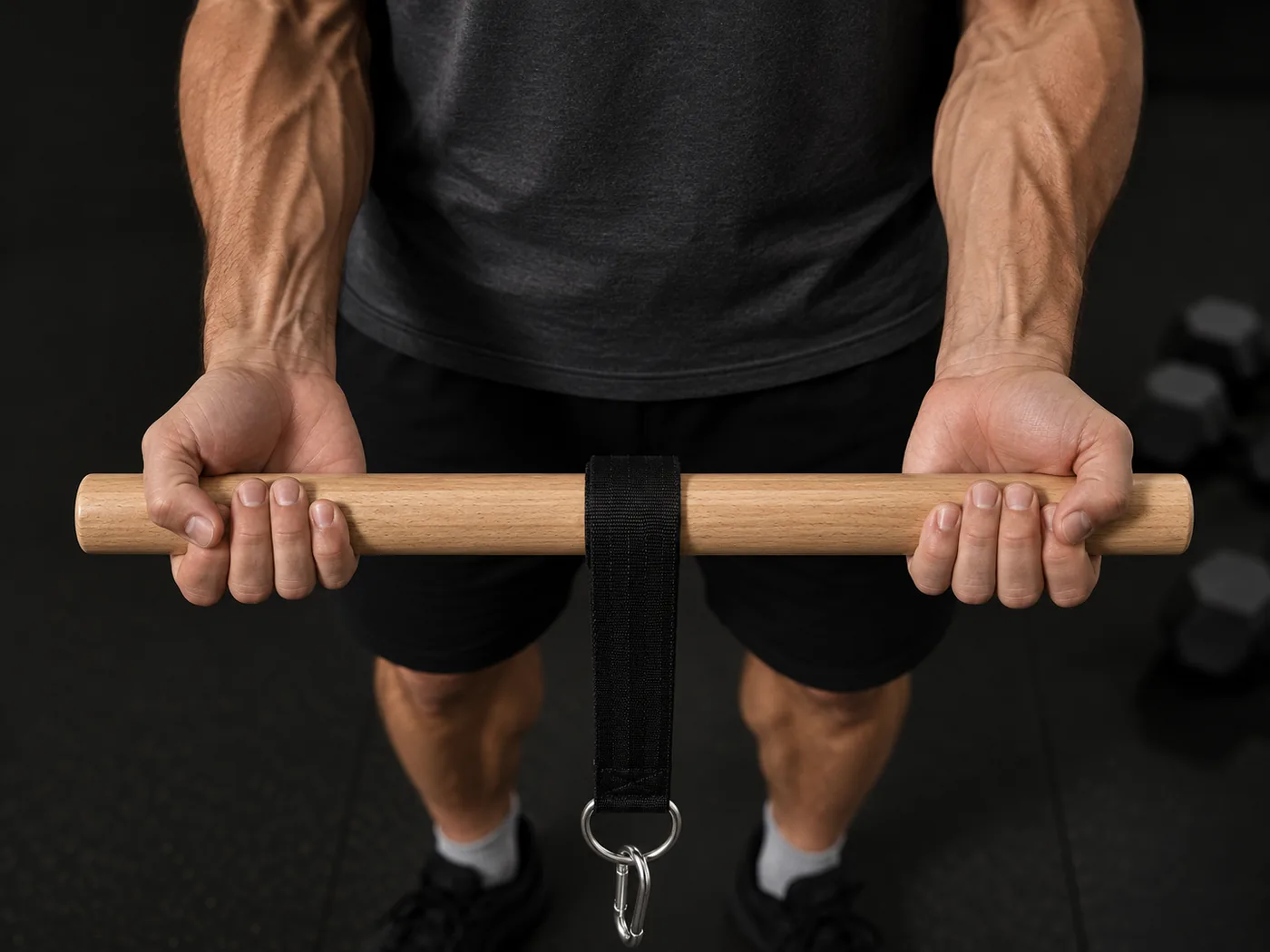
Grip endurance is the ceiling on deadlifts, rows, pull-ups, carries, climbing and every sport that involves holding another human. Because the roller forces constant re-gripping, it trains the exact endurance quality that dead hangs and straps let you avoid. The carryover arrives fast: the set of deadlifts that used to end at your fingers starts ending at your legs, which is where it belongs.
Benefit 3: a health marker, not just a gym stat
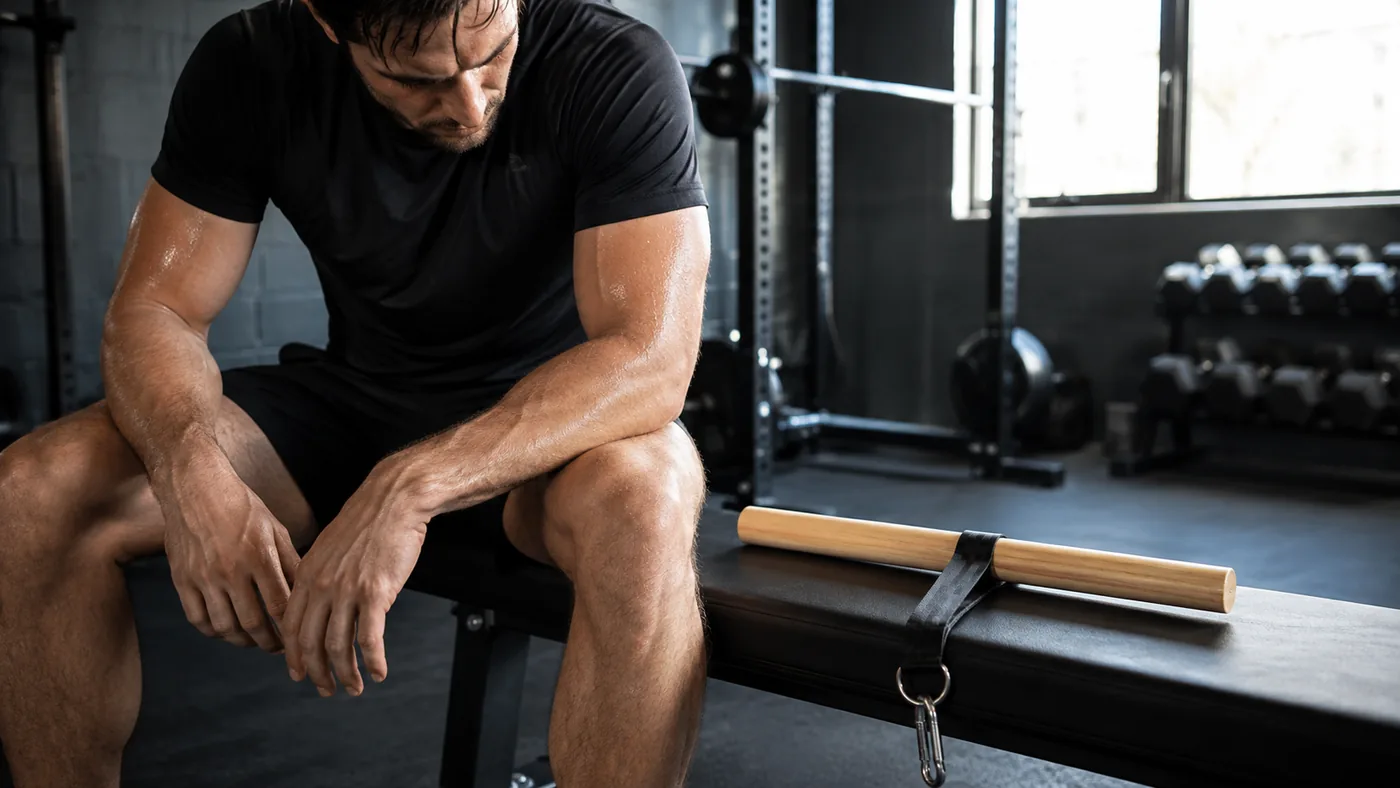
Grip strength has an unusual amount of hard evidence behind it. The PURE study, which followed 139,691 adults across 17 countries (The Lancet, 2015), found that every 5 kg (11 lb) decrease in grip strength was associated with a 16% higher risk of all-cause mortality, and that grip predicted cardiovascular outcomes better than systolic blood pressure. A roller will not transform that number overnight, but grip is one of the few gym qualities with a direct line to long-term health data.
Benefit 4: wrist stability under load
Front squats, push-ups, handstands, boxing and BJJ all punish a wrist that folds under pressure. Rolling strengthens flexion and extension through their full range, with the extensors trained eccentrically on every descent. A wrist that can resist a controlled unwind is a wrist that holds its angle when something heavy pushes back.
What a wrist roller will not do
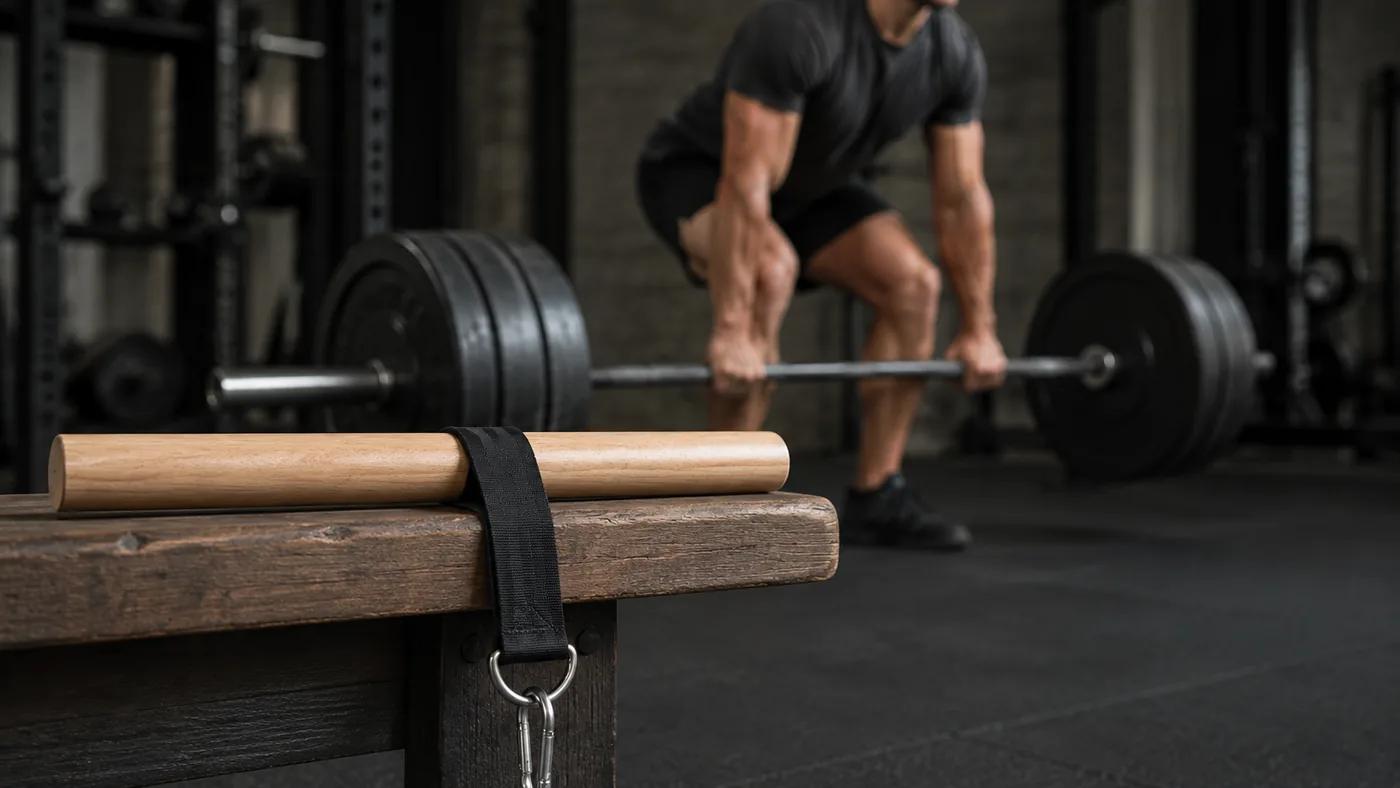
It will not build maximal crushing strength on its own: dedicated grippers load that harder. It will not fix an injured wrist, and anything painful deserves a professional opinion before a training tool. And a roller with fixed light resistance would plateau like any gadget, which is why ours loads with real plates instead. For the comparison against other tools, our forearm exerciser guide ranks the whole family.
The bottom line
One tool, one movement, four muscle groups, and a dose of two ten-minute sessions per week: that is the actual benefit case for the wrist roller, in line with the 2+ strength days per week the U.S. Physical Activity Guidelines (HHS, 2018) recommend. If your forearms have survived years of being an afterthought, this is the simplest way to promote them.