Forearm exerciser guide: what actually builds forearms
Type "forearm exerciser" into any store and you get a wall of gadgets, from $5 foam squeezers to $100 machined steel. Most of them train one narrow slice of your forearm, and a few train almost nothing once your hands adapt. This guide sorts the categories honestly, including where our own product fits and where it does not.
The five types of forearm exerciser
Every forearm tool on the market falls into one of five families. They differ in the movement they load, and that decides the results you get.
| Type | Movement loaded | Progression | Best for |
|---|---|---|---|
| Wrist roller | Flexion, extension and grip endurance | Unlimited, add any plate | Overall forearm size and endurance |
| Hand grippers | Crushing grip, finger flexion | Buy heavier grippers | Crush strength, climbing, arm wrestling |
| Wrist curl bar | Flexion, some extension if reversed | Unlimited with plates | Heavy, low-rep wrist work |
| Extension bands | Finger extension | Limited band steps | Balance work, elbow comfort |
| Twist bars and flex bars | Pronation, supination, isometrics | Fixed per bar | Rotational stability |
Why loadability decides everything
This is the quiet reason so many cheap forearm gadgets end up in a drawer. A foam gripper that challenged you on day one is a warm-up toy by week three, and there is no way to make it harder. Plate-loaded tools do not have that ceiling. The 2.5 lb jump that got you started becomes 5, then 10, then 25, and the tool never becomes obsolete. When we picked the one product this store would be built around, that was the filter: infinite progression, minimal parts, nothing to break.
The U.S. Physical Activity Guidelines (HHS, 2018) recommend muscle-strengthening work at least 2 days per week for all adults, and grip is one of the few strength markers with direct evidence on long-term health: in the PURE study published in The Lancet (2015), every 5 kg (11 lb) decrease in grip strength was associated with a 16% higher risk of all-cause mortality. Training your forearms is not just an aesthetic project.
Where the wrist roller fits, and where it does not
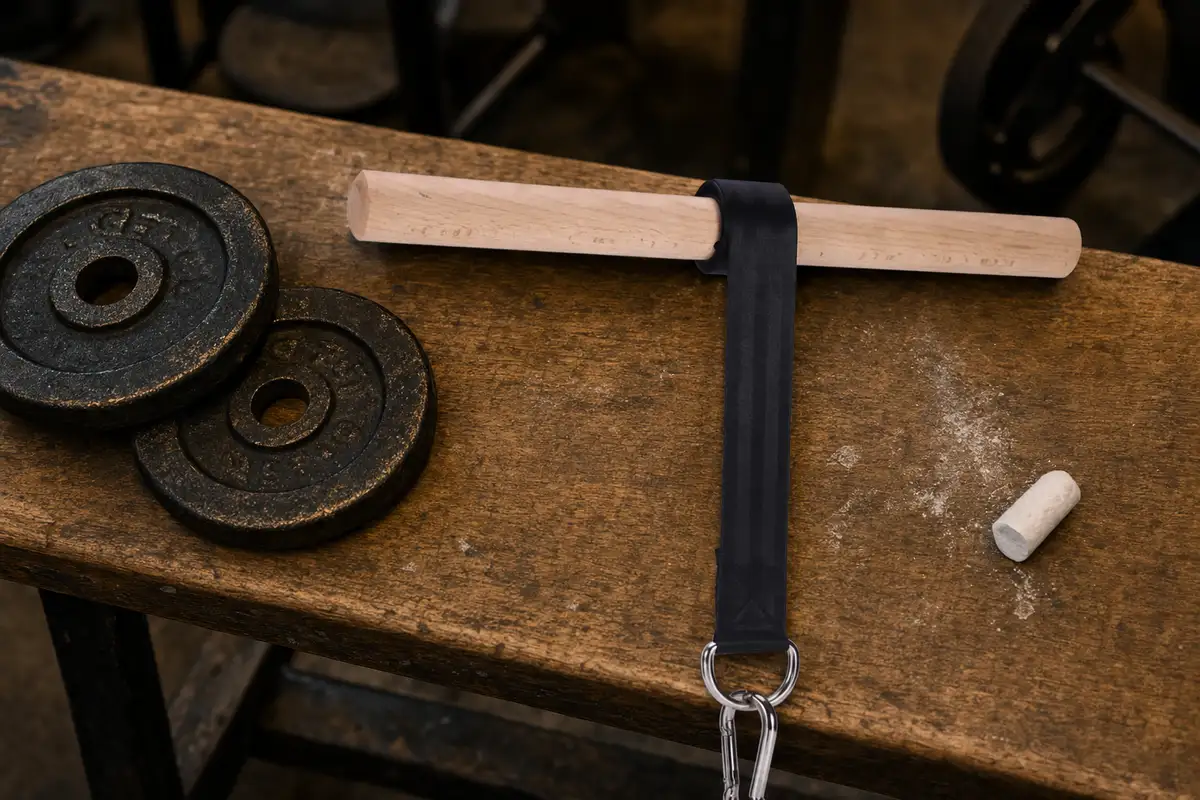
Our wrist roller is the generalist of the family. One set trains rolling flexion, rolling extension and grip endurance at the same time, and the burn arrives fast. With the strap and carabiner design, it loads with plates on a loading pin, a kettlebell or any handled weight you own, and it needs no rack or mount.
It is not the best tool for everything. If your single goal is closing heavy grippers or crushing hands in arm wrestling, dedicated grippers train that squeeze more specifically. If you need rehab-grade, very light extension work, a band set is gentler on an irritated elbow. For everyone whose goal is forearms that are visibly bigger, stronger and harder to fatigue, rolling is the highest-return ten minutes available.
For programming ideas once you own one, our wrist roller workout guide lays out complete routines, and the forearm exercises guide covers the no-equipment options honestly.
What a good forearm exerciser costs
Real prices, verified on official stores this year: premium knurled steel rollers like IronMind's One Wicked Wrist Roller list at $109.95 (ironmind-store.com, 2026). Simple wooden rollers, ours included, sit around $30. Grippers run from a few dollars for foam toys to serious spring grippers under $30 each, but you buy several as you progress. A wrist curl bar assumes you already own plates and a bench.
Our take: start with one loadable tool and a couple of small plates. That is a complete forearm gym for under $50, and it is the setup the rest of this site teaches you to use.
Forearm exerciser FAQ
What is the most effective forearm exerciser?
For overall forearm development, a wrist roller covers the most ground: it trains the flexors, the extensors and grip endurance in one movement, with constant tension. Grippers are better for pure crushing strength, and bands are better for rehab-style extensor work. Most people get the most visible results from rolling.
Do forearm exercisers actually work?
Yes, if the resistance progresses. Forearms respond like any other muscle group: they need load, controlled reps and a way to add weight over time. Tools with fixed light resistance stop working within weeks, which is why loadable tools like a wrist roller or a plate-loaded wrist curl setup keep paying off.
How often should I use a forearm exerciser?
Two or three focused sessions a week is enough for most people. Forearms already work in every pulling exercise, so a short dedicated session of five to ten minutes creates growth without cooking your wrists. Leave a rest day between sessions when you start.
Can I build forearms without any equipment?
Partially. Dead hangs, towel holds and rice-bucket work all help, and they cost nothing. What bodyweight cannot give you is progressive external load in extension, the movement that balances your wrist. That is where a loadable tool earns its price.