
Wrist roller workout: three routines that actually progress
The wrist roller looks like a novelty until the first set ends and your forearms are on fire. The mistake most people make is treating it like a toy: random weight, random reps, no plan. Rolled with structure, it responds like any barbell lift. These are the three routines we run on the Gripwood roller, with its 15.7 in (40 cm) handle, and they transfer to any freestanding roller.
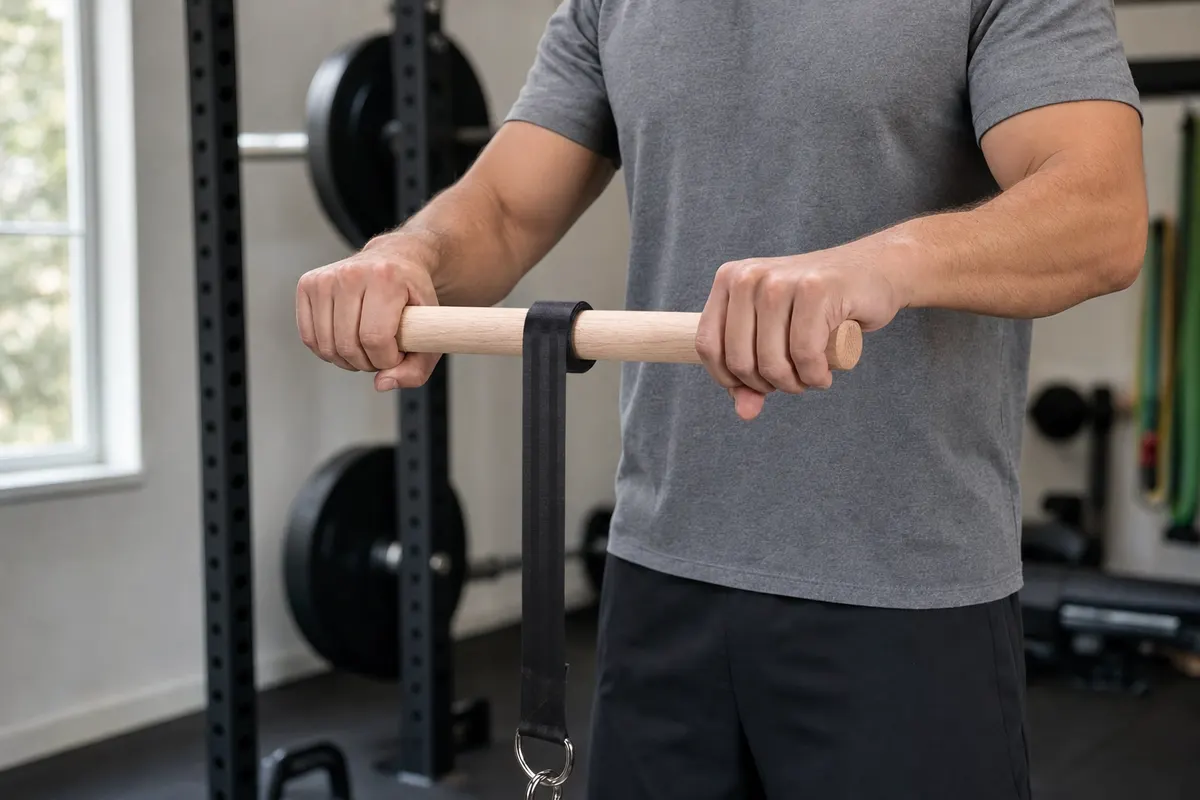
Before you start: form in four lines
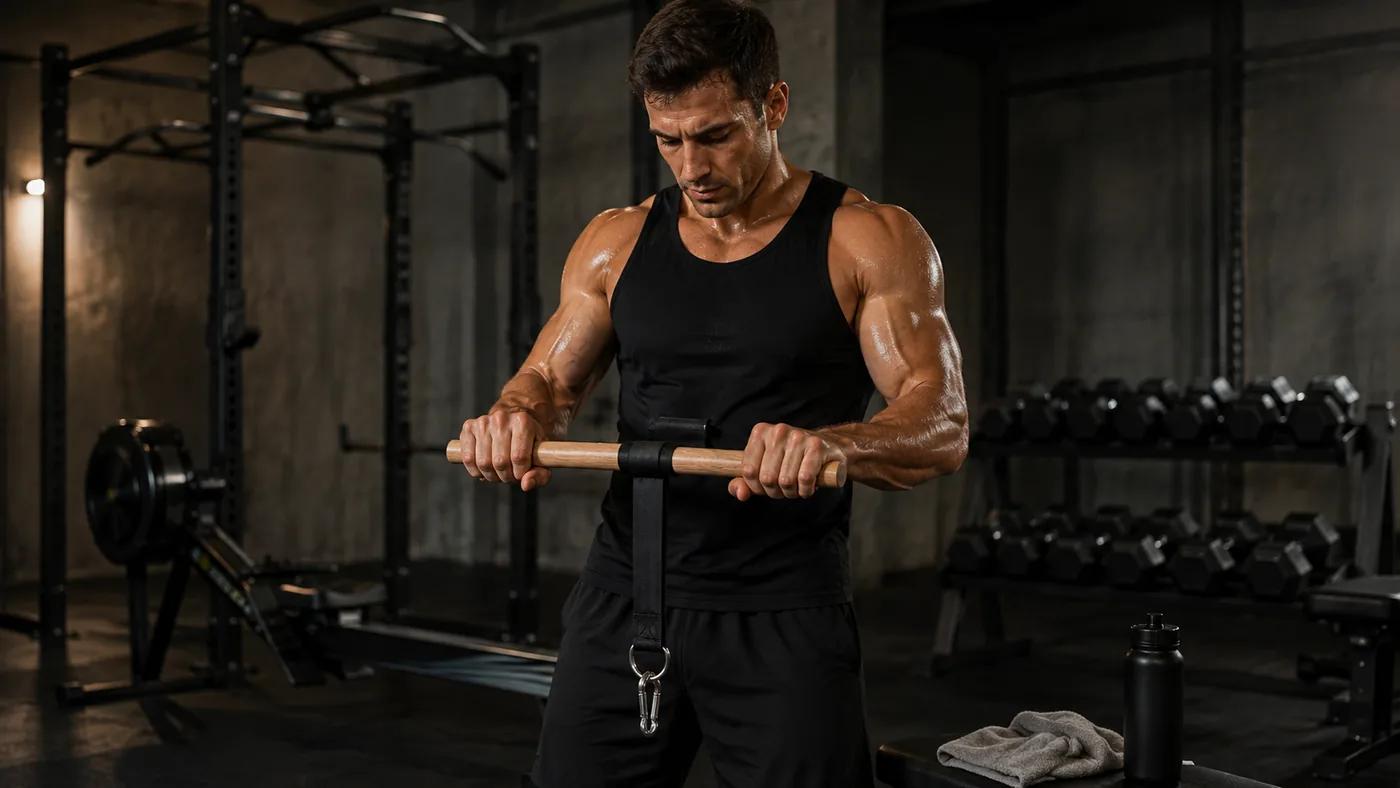
Hold the handle at shoulder height, palms down, arms almost straight. Roll hand over hand so the strap winds up and the weight climbs. Reverse it just as slowly, because the lowering half builds most of the strength. Keep the wrists moving and the shoulders quiet, and put the roller down when your rotation turns into a shrug. The full technique walkthrough lives in our how-to guide.
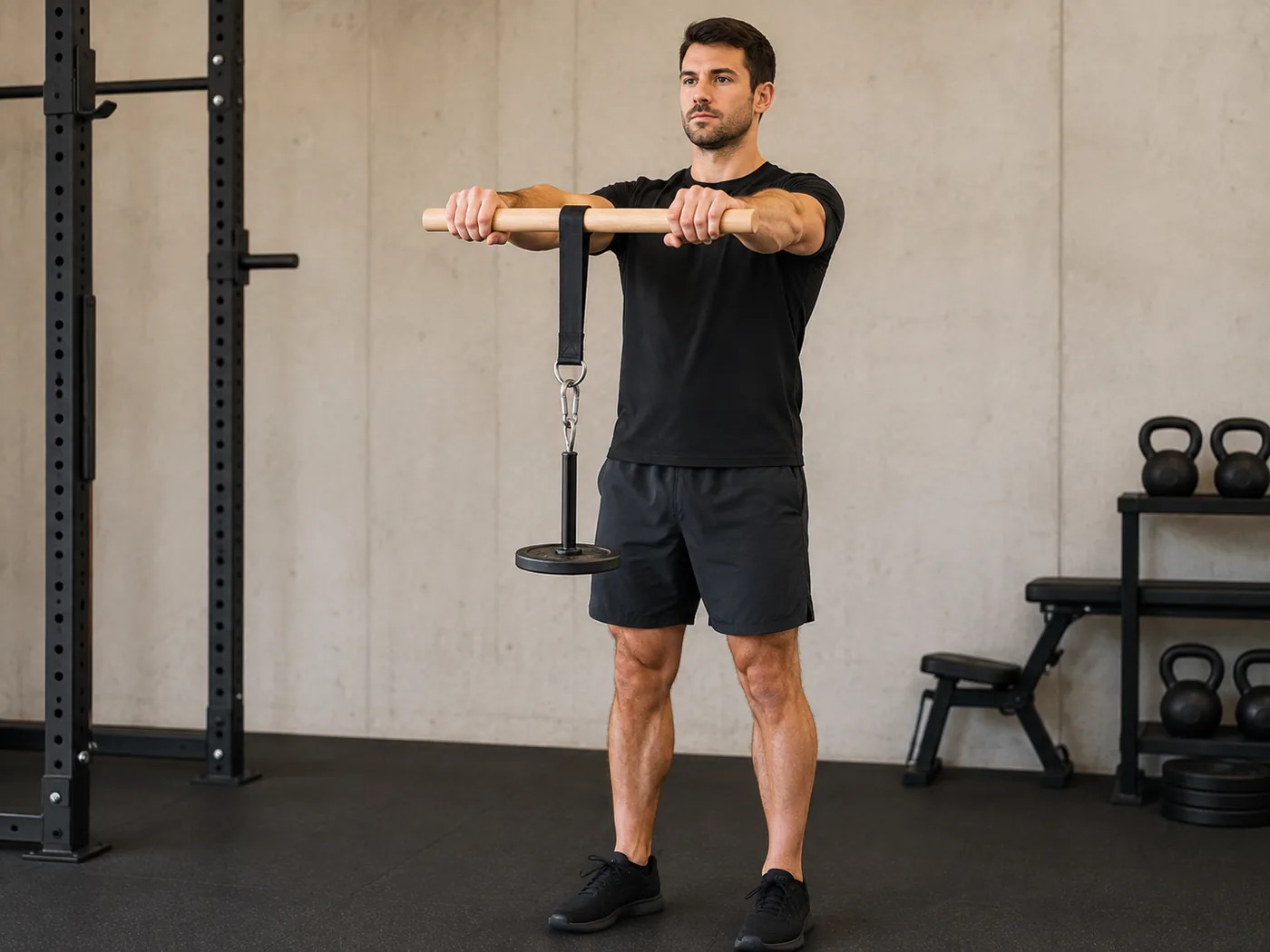
Routine 1: the first two weeks
| Exercise | Sets | Load | Rest |
|---|---|---|---|
| Roll up + slow unwind, palms down | 3 | 2.5-5 lb | 90 s |
| Dead hang from a bar (optional) | 2 | Bodyweight | 60 s |
Two weeks feels overly patient, and that is the point. Wrist tendons adapt more slowly than the muscles around them, and the soreness from an enthusiastic first session can cost you ten days. Finish every set knowing you had one more roll in you.
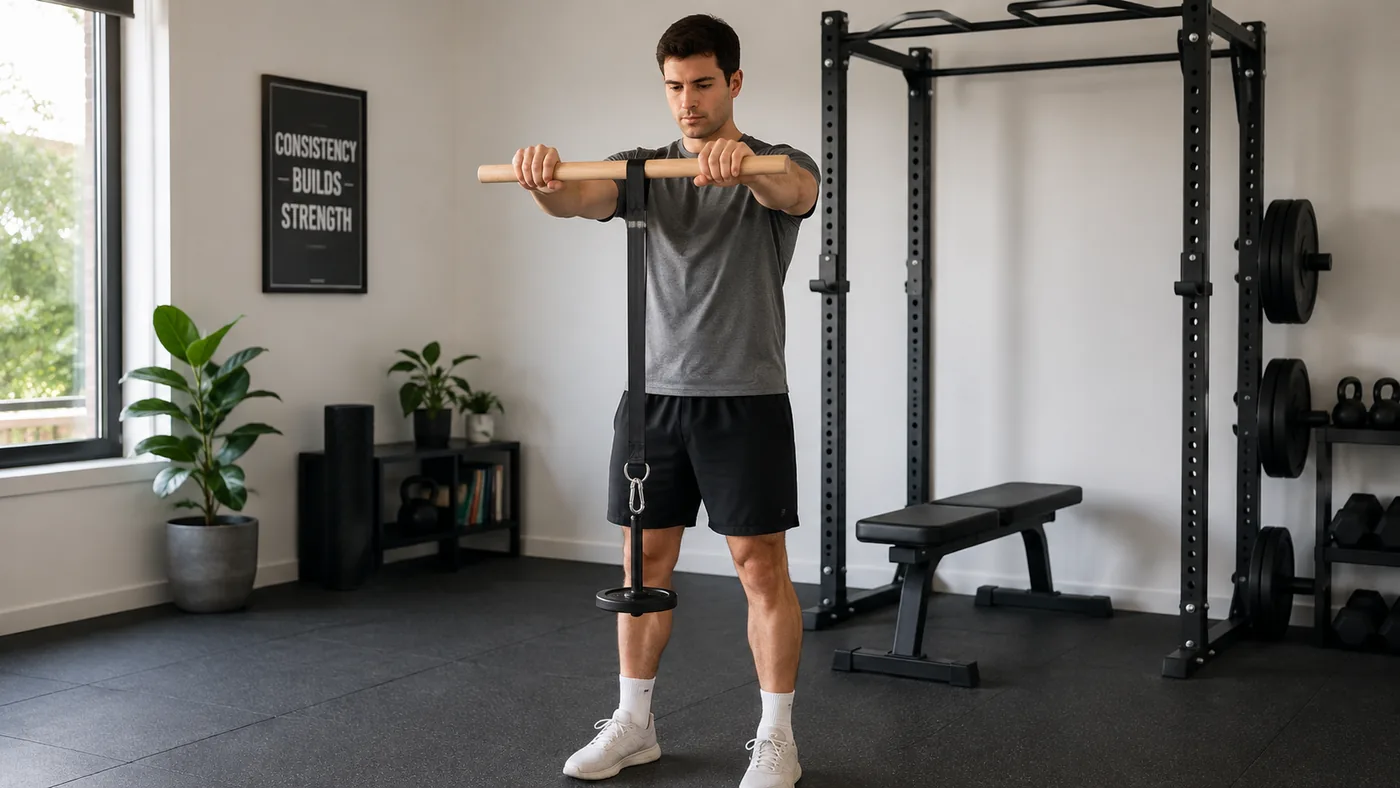
Routine 2: the hypertrophy block
| Exercise | Sets | Load | Rest |
|---|---|---|---|
| Roll up + unwind, palms down | 3 | 10-15 lb | 2 min |
| Roll up + unwind, palms up | 2 | Same or 2.5 lb less | 2 min |
| Top hold: weight rolled up, hold | 2 | Same load, 10 s hold | 90 s |
The palms-up sets matter more than they seem. Most lifters have overtrained flexors from years of curls and rows, and underworked extensors on top of the forearm. Rolling in both grips evens out the wrist, and balanced training across the week is exactly what the U.S. Physical Activity Guidelines (HHS, 2018) prescribe: muscle-strengthening work for all major groups at least 2 days per week. Forearms count.
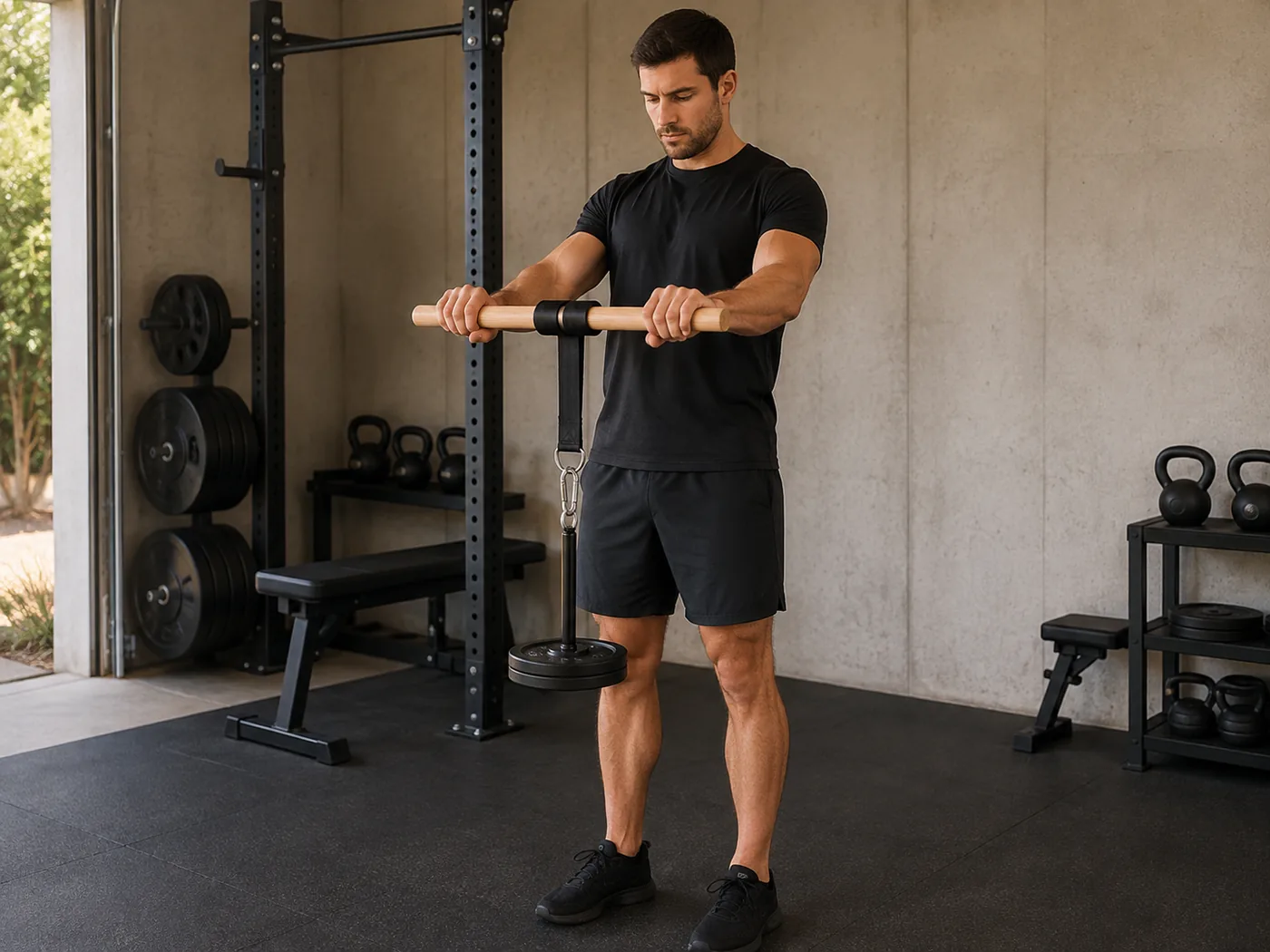
Routine 3: the grip-endurance finisher
| Exercise | Format | Load | Rest |
|---|---|---|---|
| Continuous rolling, alternate directions | 3 rounds of 60 s | 5-10 lb | 60 s |
| Farmer hold or towel hang | 2 max holds | Heavy | 90 s |
Endurance rolling is humbling. Sixty seconds of continuous rotation with 8 lb clipped to the carabiner beats most forearm burnouts you have tried, and grip endurance is worth building for reasons beyond the gym: in the PURE study of 139,691 adults published in The Lancet (2015), grip strength predicted health outcomes strongly enough that the authors proposed it as a routine clinical measurement.
Progression: the only rule you need
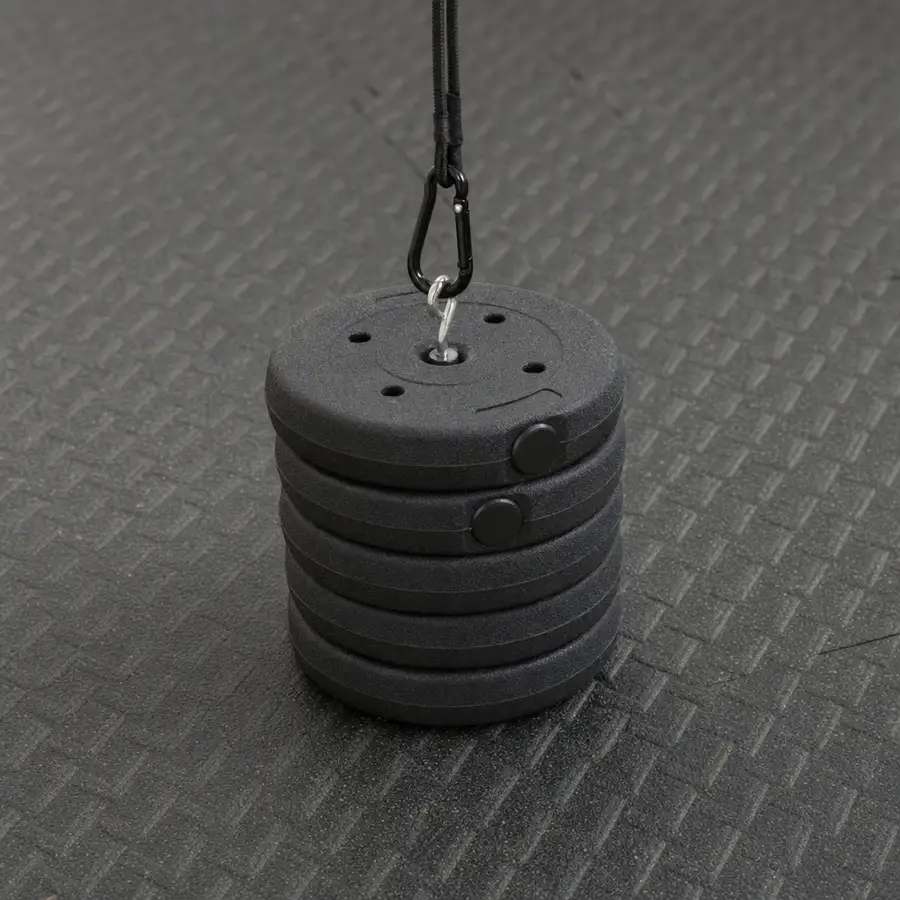
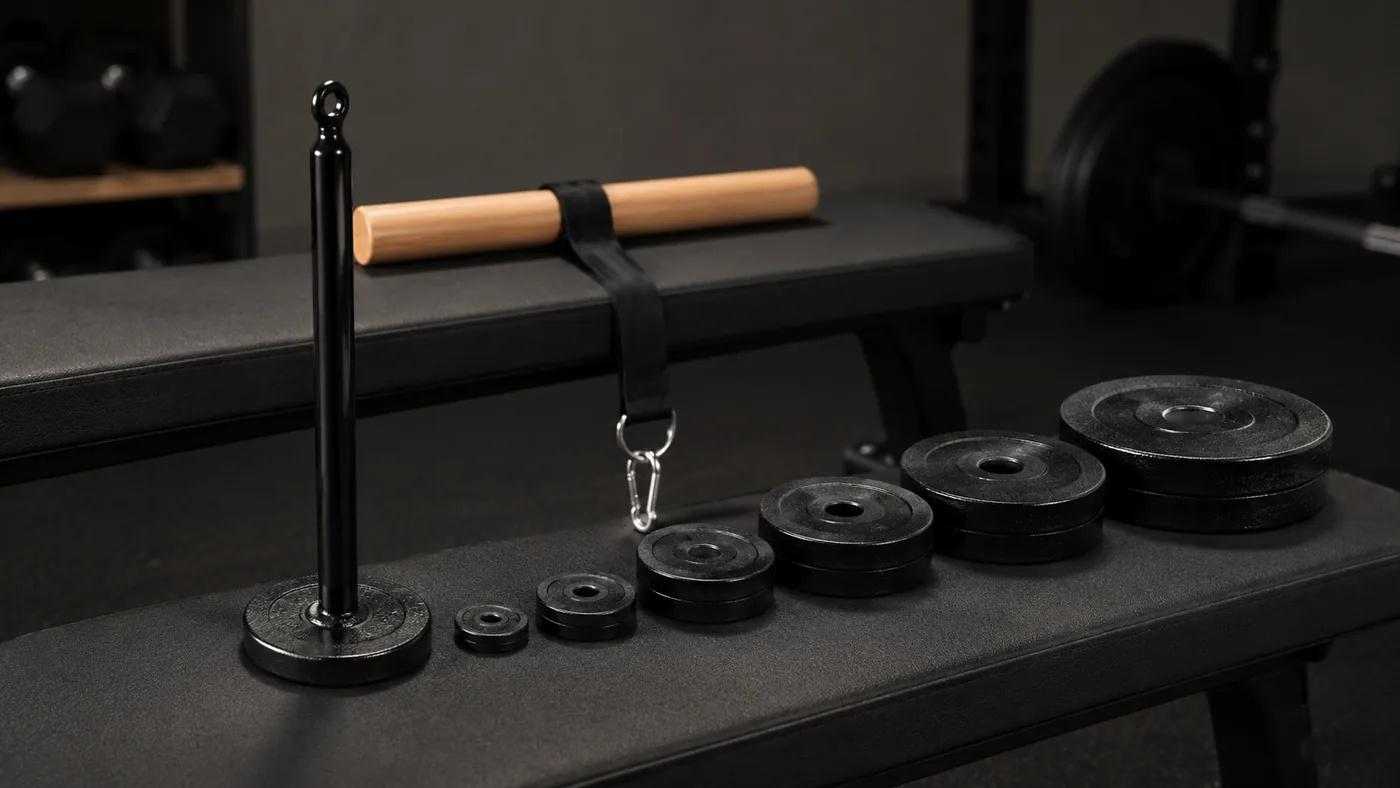
Add 2.5 lb when every prescribed set finishes with a slow, controlled unwind and no shoulder cheating. If a new load breaks your lowering speed, drop back for a week. Loads clip to the strap's carabiner in seconds: plates ride cleanest on a loading pin, and the same pin works for the holds in routine 3. That is the entire progression system, and it works for months without modification.
Track it somewhere. A note on your phone with the date, the load and how the last unwind felt is enough, and it turns a novelty tool into a lift you actually progress. The lifters who quit rolling are almost always the ones who rolled the same plate at the same speed for two months and concluded it stopped working. The load was the thing that stopped.
Wrist roller workout FAQ
How many sets of wrist rolling should I do?
Three to five complete rolls, up and down, counts as a working session for most people. One full roll takes 30 to 60 seconds of continuous tension, which is far more time under load than a set of curls. More than five quality rolls per session mostly adds soreness, not growth.
Should I roll palms up or palms down?
Both, in alternation. Palms down (overhand) emphasizes the extensors on top of the forearm, which most lifters underuse. Palms up (underhand) shifts the work to the flexors underneath. Alternating between sessions, or between sets, keeps the wrist balanced.
Can I do a wrist roller workout every day?
You can roll light every day, but loaded sessions work better spaced out. Forearms recover faster than big muscle groups, yet the tendons around the wrist adapt more slowly than the muscle. Two or three loaded sessions a week with rest days between them is the sustainable rhythm.
Why do my shoulders burn before my forearms?
Because holding a bar at shoulder height is itself an isometric front raise. It is normal, and it fades as your delts adapt. To take the shoulders out entirely, roll with your elbows bent at 90 degrees and tucked to your ribs, or rest your forearms on a bench or rack safety bars.