· Adam Rizzo
Wrist roller for climbers, grapplers and lifters: where the carryover lands
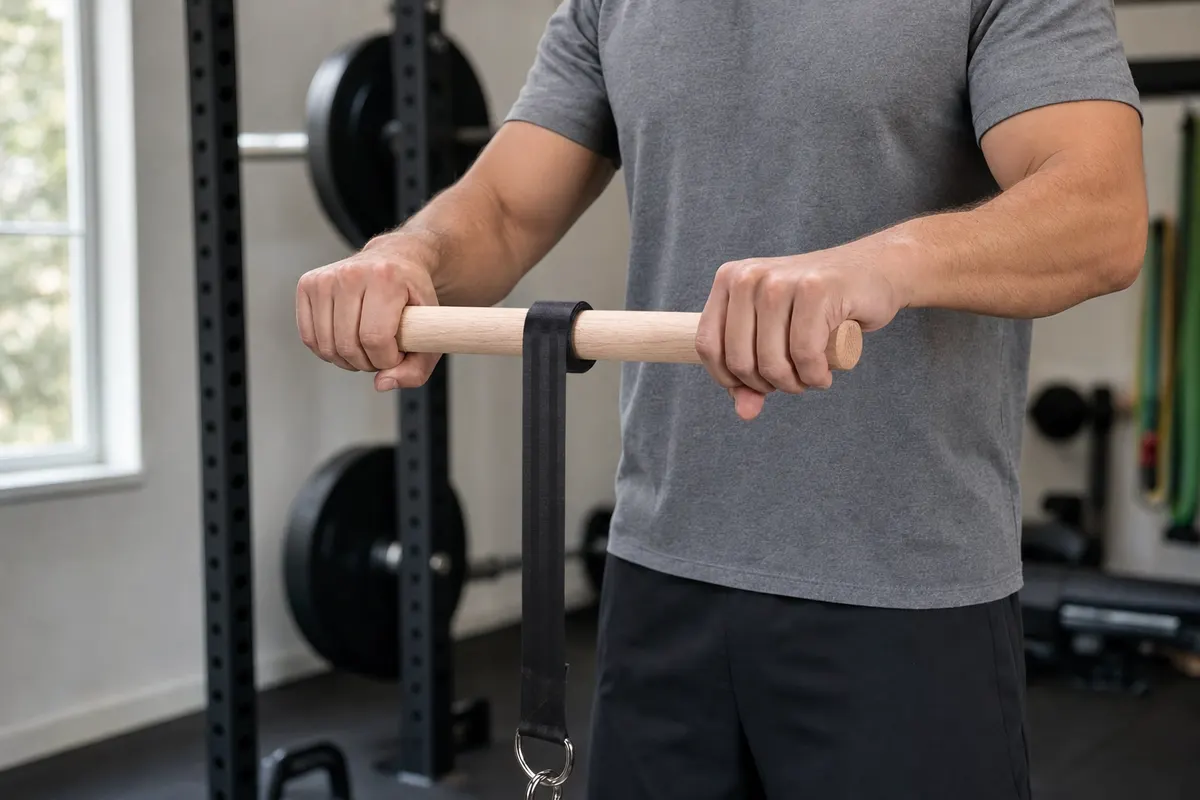
Most forearm content is written for the mirror, and bigger forearms are a perfectly good reason to own a roller. But the people who are still rolling three years later almost never arrive that way. They arrive because their fingers opened on the third attempt of a route, because their grip died in the last round, because a deadlift set ended at their hands instead of their legs. This guide maps the sports and the jobs where the forearm is the actual ceiling, and what rolling changes in each one.
The one quality every grip sport shares
Take the uniforms away and the demand is startlingly similar. A hand closes on something, holds it while the body does work, opens partway, closes again, and repeats that cycle for far longer than any gym set lasts. Nothing about it resembles a heavy triple. It is tension held and renewed, over and over, until the hand simply will not close with authority any more.
That is the quality rolling trains, and it is close to the only movement that trains it in one continuous piece. There is no lockout, no rack position, no moment where the load rests on your skeleton instead of your muscles. From the second the plate leaves the floor to the second it touches down again, your fingers, your flexors and your extensors are all working, and the extensors are working eccentrically the whole way down. Our breakdown of the muscles involved maps that in detail, and the technique guide covers the grip and lowering speed that make a set count. What follows is what that continuous tension is worth, sport by sport.
Notice what is missing from that description: a one-rep maximum. Almost nothing on this list is decided by the single hardest squeeze a hand can produce. It is decided by the fortieth squeeze, and by whether it still resembles the first one. Endurance under tension, not peak crushing force, is the currency, and that changes which tool earns the ten minutes.
Climbing: the forearm is most of the sport
No athlete is as forearm-limited as a climber. The legs can be fresh, the head can be calm, and the attempt still ends because the flexors are so pumped that the fingers will not shut. Climbing is a sport of repeated re-gripping under body weight, held in awkward positions, with recovery measured in the few seconds a shake-out buys you on the wall.
Rolling gives a climber two things the wall does not. The first is loadable endurance work that does not put another session of finger stress on the same tendons in the same positions: you set the weight, you control the tempo, and the hand works through a full open-and-close cycle instead of a locked crimp. The second is extension. Climbing is thousands of closing reps and almost no opening ones, and rolling with the palms down loads the extensors on top of the forearm every time the strap winds up. Alternating palm directions across sessions, the way our routines lay out, is how you keep both sides of the forearm developing together instead of one side running away with it.
Placement matters more here than in any other case on this list. Forearms that are still tired on the wall cost you attempts, so rolling generally goes on a non-climbing day, or at the tail end of a session that is already over, rather than in front of one. Start light for the same reason: the muscle adapts faster than the tissue around it, and the first two weeks are for the tendons, not for your ego.
Grappling: the grip that is still there in the last round
Jiu-jitsu, judo and wrestling turn grip into currency. Whoever can still grab a sleeve, a collar or a wrist at minute eight is the one dictating where the exchange goes, and the athlete whose hands are cooked spends the rest of the round defending. Gi grips in particular are pure sustained flexion with constant re-gripping as the fabric slips and is retaken, which is a description of a roller set with a different noun.
There is a second, quieter carryover. Posting a hand, framing against an opponent and holding a base all load the wrist at angles that want to fold it, and a wrist that can resist a controlled unwind is a wrist that holds its angle when something heavy pushes back. That is not a claim about protecting yourself in a scramble; it is simply the joint being trained through its range against resistance rather than only being asked to survive. Rolling is also one of the few pieces of forearm work you can do on a mat day without touching a barbell.
Gi and no-gi pull on the hand differently, and rolling sits underneath both. Cloth grips are sustained, high-friction holds that ask the fingers to stay shut while a partner works to strip them. No-gi trades that for wrist control, collar ties and overhooks, where the hand is often half open and the forearm is bracing rather than crushing. One movement that trains closing, resisting and holding tension covers the whole spread without adding a second tool to the bag.
Arm wrestling and strongman: the wrist that refuses to fold
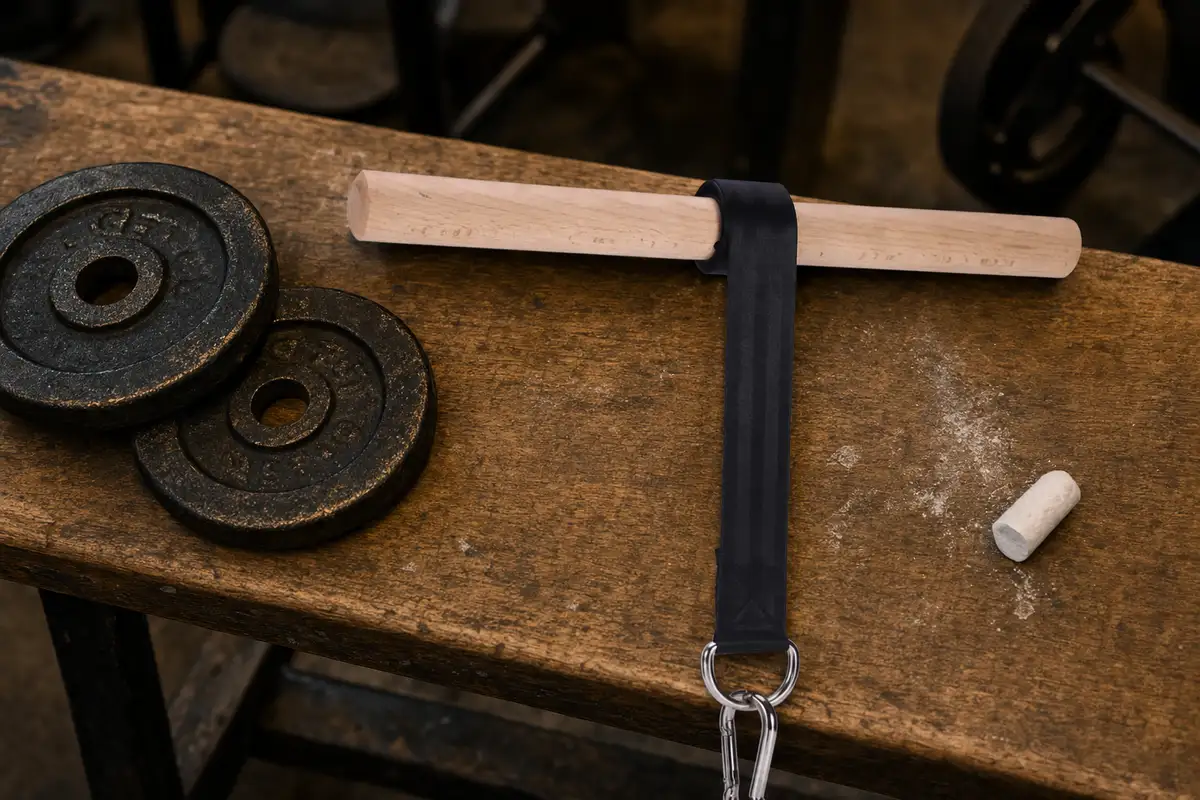
Table sports and heavy-implement sports share a problem: the wrist has to hold a position while enormous force tries to change it. In arm wrestling the wrist is the position, and a hand that gives up its angle has lost the match regardless of what the arm can do. In strongman work the same joint has to keep its shape under an implement that is actively trying to roll out of your hands.
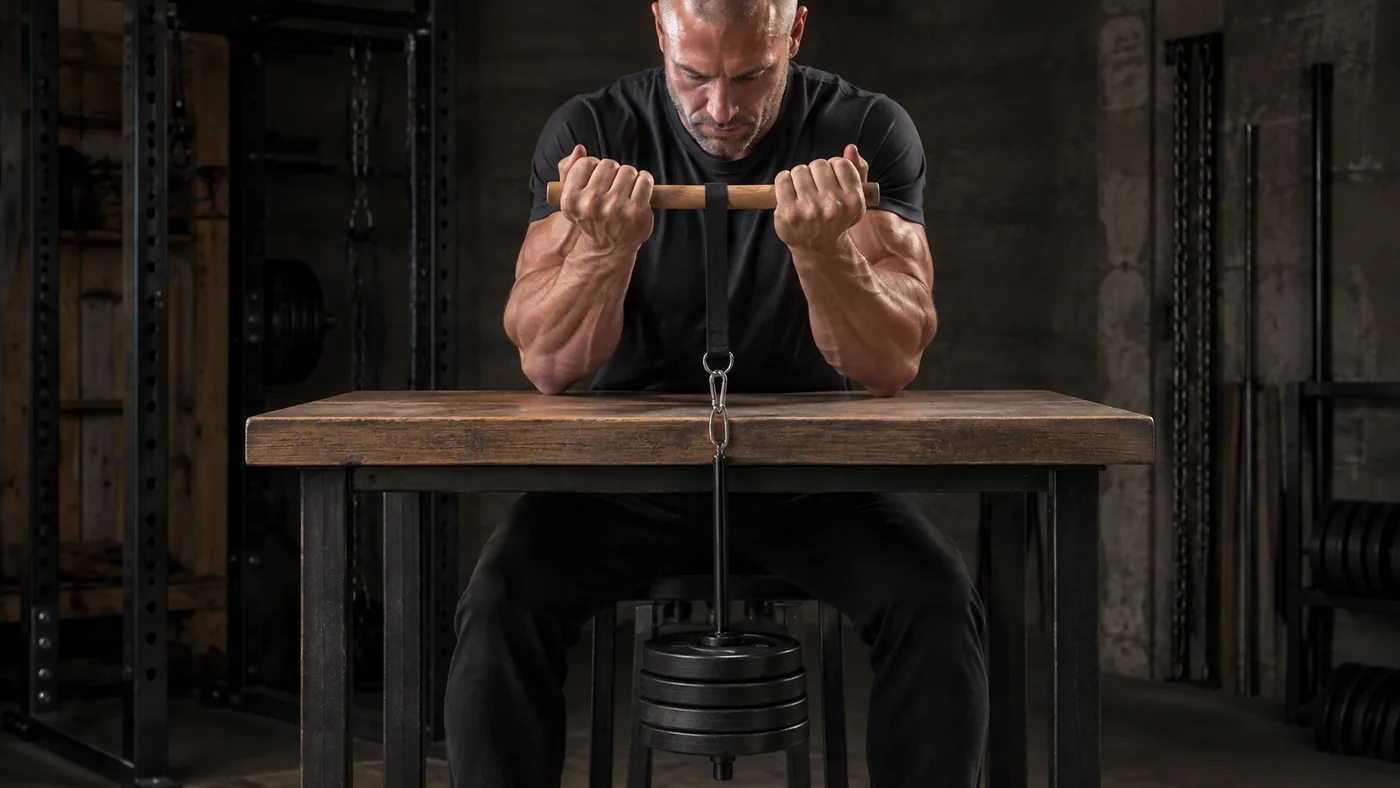
Rolling contributes the endurance and the balanced flexion-extension work that keeps that position available late in a session. It is not the whole answer for these two: if maximum flexion strength is the goal, a loaded bar lets you go far heavier in a short range, and our roller versus curl bar comparison explains exactly how the two divide the labor. The pairing most competitors land on is heavy flexion work for the top-end number and rolling for the endurance and the extensor side that heavy flexion work never touches.
Barbell lifters: when the set ends at your fingers
Every lifter knows the moment. The bar is moving, the legs have plenty left, and the hands start to open. You either drop the set early or reach for straps, and straps solve the session while leaving the underlying problem exactly where it was. Grip endurance is the ceiling on deadlifts, rows, pull-ups and carries, and it is the one quality a strap lets you avoid training for years at a stretch.
Because the roller forces you to re-grip continuously under a load you choose, it trains that ceiling directly and it does so with a weight small enough to leave your main lifts alone. Plates ride cleanest on a steel loading pin, and the same pin doubles as a handle for timed holds. Then the change shows up where you wanted it: the set of deadlifts that used to end at your fingers starts ending at your legs, which is where a deadlift set is supposed to end. If you are not sure what to hang on the strap on day one, our loading guide maps weights to levels.
Racket, stick and bat sports: holding an angle against impact
Tennis, padel, hockey, baseball and golf all ask the same two things of a forearm, and neither is glamorous. First, hold a wrist angle at the instant of contact, when the implement is being knocked out of line by something arriving fast. Second, keep holding it for two hours, because a grip that softens in the third set changes where the face of the racket points long before the player notices.
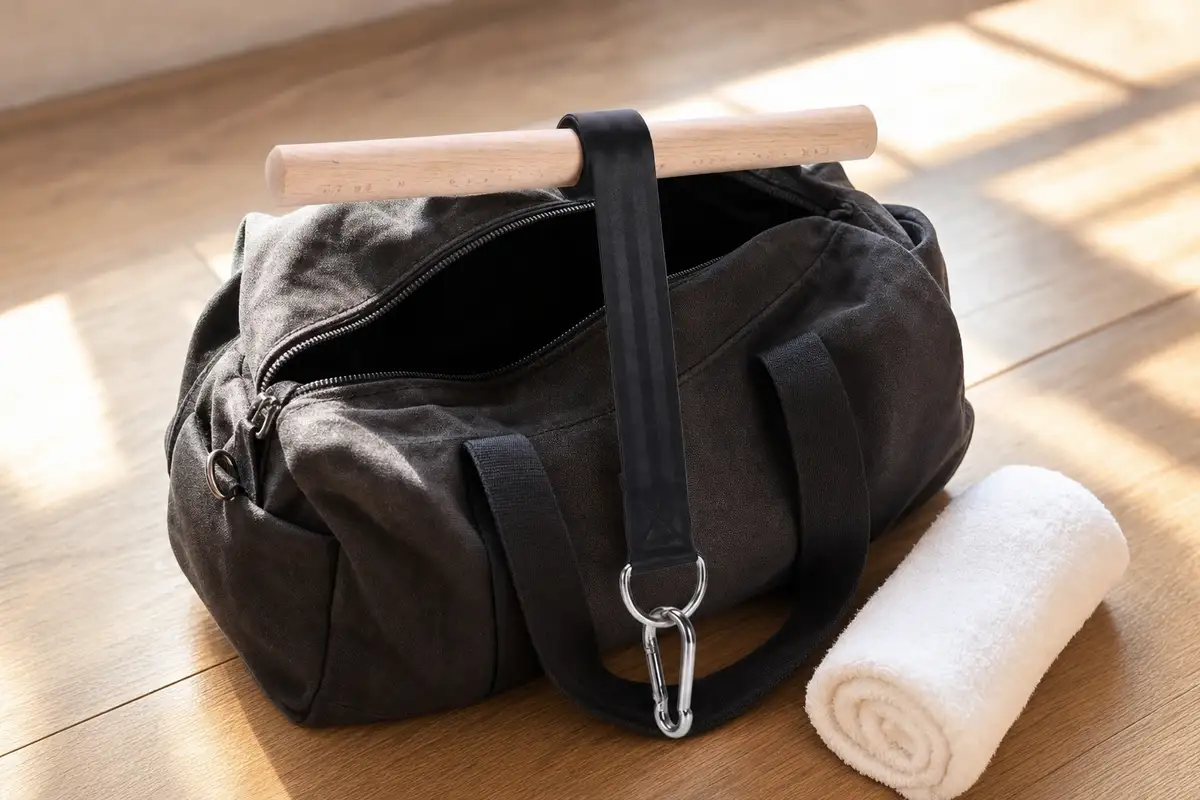
The useful part for these athletes is that rolling loads both directions of the wrist in the same set. Sport puts thousands of gripping reps into a season and almost no opening reps, and extension work is cheap insurance against that imbalance for anyone whose hand is closed around a handle all weekend. A roller also travels: the whole thing is a 15.7 in (40 cm) wooden bar and a strap, so it lives in the same bag as the racket rather than waiting at the gym.
The off-season is where it fits most easily of all. Seasons end, hands stop gripping anything for months, and the forearm quietly gives back what the summer built. Ten minutes twice a week through the cold half of the year keeps loaded grip work in the schedule while the racket, the stick and the clubs sit in a closet, and it asks for no court, no ice and no partner.
Trades, tools and keyboards: the case nobody trains for
Not every reason to own one is athletic. Carpenters, mechanics, electricians and anyone who spends a day driving torque through their hands are grip athletes who never programmed for it, and they hit the same wall in the afternoon that a climber hits on an attempt. At the opposite end, the desk worker holds a mild, unbroken flexion posture for eight hours and gets almost no loaded work in either direction. Both cases are the same shape: a forearm asked to do one thing constantly and its opposite never.
What neither case needs is more of what the day already supplies. A mechanic does not need another hour of squeezing, and a keyboard does not need help holding your wrists in flexion. Both need the missing direction loaded deliberately, which is what winding a weight up and lowering it back under control does inside a single set, in the time it takes to boil a kettle.
Grip strength is also worth training for reasons that have nothing to do with a sport at all. In the PURE study of 139,691 adults across 17 countries (The Lancet, 2015), every 5 kg (11 lb) decrease in grip strength was associated with a 16% higher all-cause mortality risk, and grip predicted cardiovascular outcomes better than systolic blood pressure did. That is a strong argument for owning one loadable tool that keeps working as you get stronger, and our forearm exerciser guide ranks the whole family on exactly that criterion.
Fitting it into a week that is already full
This is the part that makes the carryover realistic for people who already train something else. A complete session is three to five full rolls up and down, which lands under ten minutes, and the U.S. Physical Activity Guidelines (HHS, 2018) put the floor for muscle-strengthening work at 2 days per week for adults. Nobody is asking you to rebuild your schedule around your forearms. Clip a small plate on at the end of a pull day, or roll on a rest day while the coffee brews, and the session is finished before the mug is empty.
Whichever description fits you, the mechanism underneath is identical: continuous tension, both directions, a load you can keep adding to for years. That is what the Gripwood roller delivers at $29.95, with free shipping and a 30-day money-back guarantee. Give your hands the ten minutes that stop them being the thing that ends the set.