
· Adam Rizzo
Rack-mounted wrist roller vs free-hanging: setup and loading
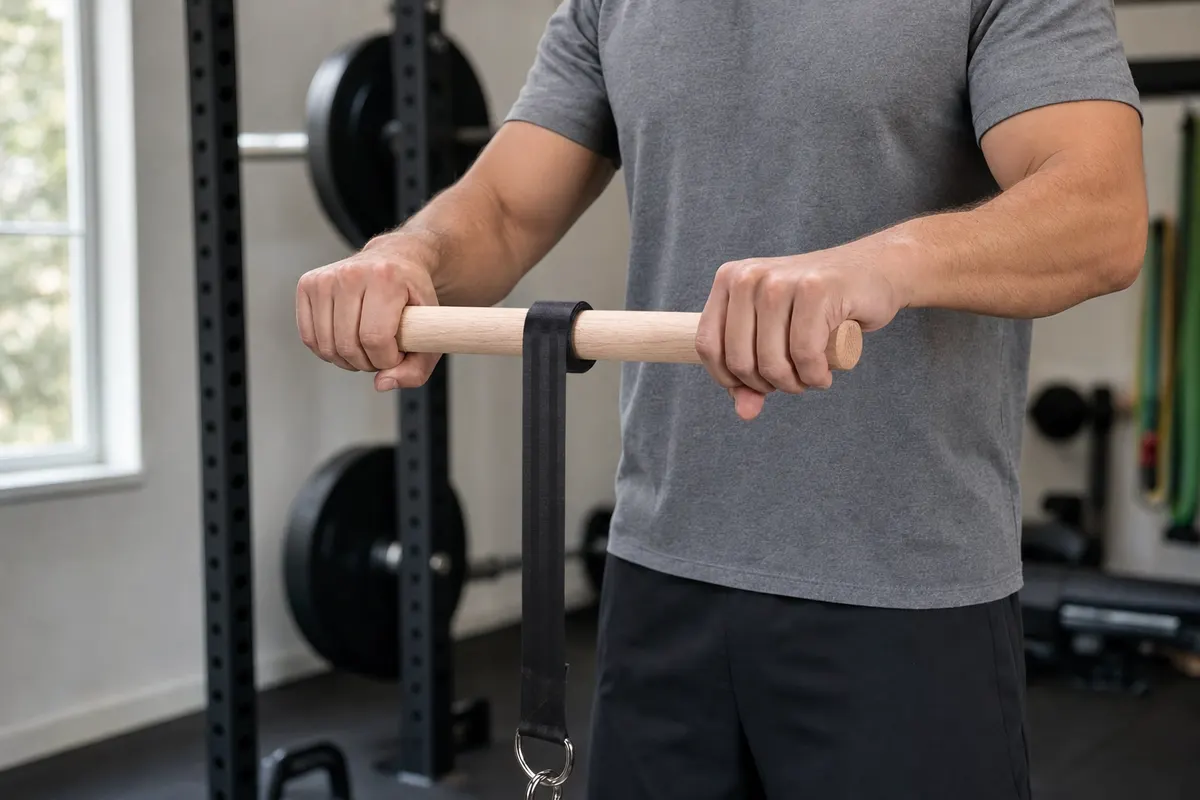
Search for a rack-mounted wrist roller and you get two very different things wearing one name. One is a bar that bolts permanently into a power rack. The other, far more common, is a normal roller simply rested inside one. This guide is about the second, because it costs nothing, it undoes in a second, and it is available to anyone who owns a roller and can stand in front of a rack.
The movement itself does not change between the two. Grip, rotation and lowering speed are the same wherever you stand, and the technique guide covers those in order. What changes is which muscle decides your set is over.
The two stations, one movement
Almost every way people roll falls into one of three stations. They are not levels, and the third is not an upgrade on the first. They are different jobs.
| Station | How it looks | What ends the set |
|---|---|---|
| Free-hanging, arms extended | Bar at shoulder height, arms nearly straight, load swinging clear of the floor | Usually your front delts |
| Free-hanging, elbows tucked | Elbows at 90 degrees against your ribs, bar just in front of you | Your forearms, mostly |
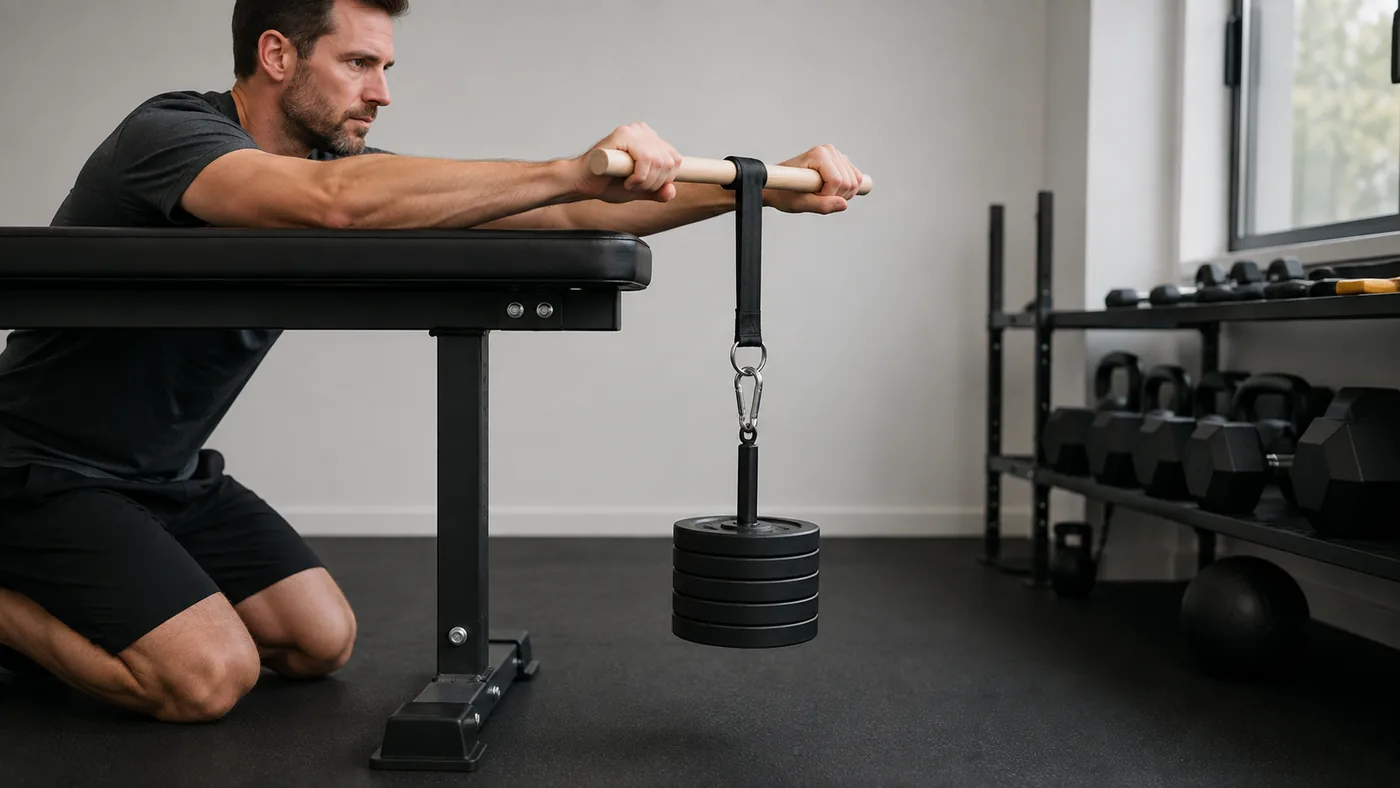
| Rack-supported | Bar resting across two safeties or spotter arms, forearms or upper arms braced | Your forearms, every time |
That last column is the whole article. When you hold a loaded bar at arm's length, you are performing an isometric front raise on top of the rolling, and your shoulders were never the muscle you came to train. Put the bar on a support and the shoulder contribution goes to roughly nothing, which means the set runs until your flexors and extensors give out and not one second before.
What a rack actually changes
Three things, in descending order of how much they matter.
First, the limiter moves. This is the reason the rack version exists. Anyone who has finished a set with burning delts and forearms that felt like they had two more rounds in them has met the problem the rack solves.
Second, the bar stops drifting. Held in the air, a loaded roller wants to tilt whenever the strap wanders off centre, and you spend attention correcting it. Resting on two supports, the bar has a defined axis and rotates in place. The strap still needs to stay centred between the supports, but the bar cannot dip at one end the way it does in the air.
Third, the set gets boring in a useful way. Nothing is fighting you except the load, so the slow unwind that builds most of the strength becomes easier to hold on to for the full descent. That descent is where the extensors do their eccentric work, which is the part of rolling that separates it from wrist curls.
Setting the height: your elbows decide, not the rack
The single most common rack setup mistake is choosing the pin height by what looks tidy instead of by what your arms are doing. Racks differ, so no number in inches would help you here. The rule that transfers to any rack is about your own body.
Set the supports so that when your forearms rest on them, your upper arms hang close to vertical and your elbows sit at roughly 90 degrees. From there your hands are in front of your chest, your shoulders carry nothing, and your wrists have a full range to rotate through without your knuckles running into the support.
Too low and you end up hunched over the bar, which turns a forearm exercise into a lower back complaint by the third set. Too high and your shoulders creep back into the movement, which defeats the point of using the rack at all. If you catch your shoulders shrugging, the supports are a hole or two too high.
One detail that saves a set: leave enough of the bar sticking out past each support that it cannot walk sideways off the end while it rotates. Rolling drives the bar in one direction as it winds, and a bar with two inches of margin will find the edge eventually.
The clearance problem nobody warns you about
Here is the failure that catches people the first time they roll in a rack, and it has nothing to do with strength. The bar sits lower in a supported position than it does at shoulder height, sometimes much lower. The strap length has not changed. So the load reaches the floor while there is still strap left to wind, the tension drops out mid-rep, and the set ends early for a reason that has nothing to do with your forearms.
Check it before you load anything heavy. Hang the empty strap from the bar at your chosen support height and look at where the carabiner lands. If it is already close to the floor, you have three fixes, in order of preference: raise the supports a hole, roll the strap up a few turns before the first rep so you start with less of it hanging, or stand the whole setup over a slightly raised platform if your rack allows it.
This is also where a loading pin earns its place in a rack more than it does in the air. Plates stacked on a pin hang in one tidy vertical column directly under the strap, so the load takes up the least possible height and clears the floor for longer. A kettlebell, by comparison, is a wide object that reaches the ground sooner and can catch a rack upright on the way down. In free-hanging work either attachment is fine; in a rack the pin is the one that keeps giving you full reps.
What the rack changes about the load you can hold
More than most people expect. Taking the shoulders out does not make your forearms stronger, but it stops something else from failing first, and the practical result is that a load you could not survive at arm's length becomes a load you can finish.
The leverage at your wrists has not changed, though, and that is the trap. The temptation after one comfortable supported set is to jump the load hard, because the set felt easy in the shoulders. Wrist tendons adapt more slowly than the muscles pulling on them, and they do not care which station you used. Keep moving in the same small steps the loading guide lays out, and let the extra room the rack buys you show up as more controlled reps rather than a bigger jump on the pin.
A good self-check: if your lowering speed collapses at a new weight in the rack, the jump was too big, exactly as it would have been standing up. The descent measures you the same way at every station.
Where free-hanging still wins
Plenty of places, and this is not a consolation prize.
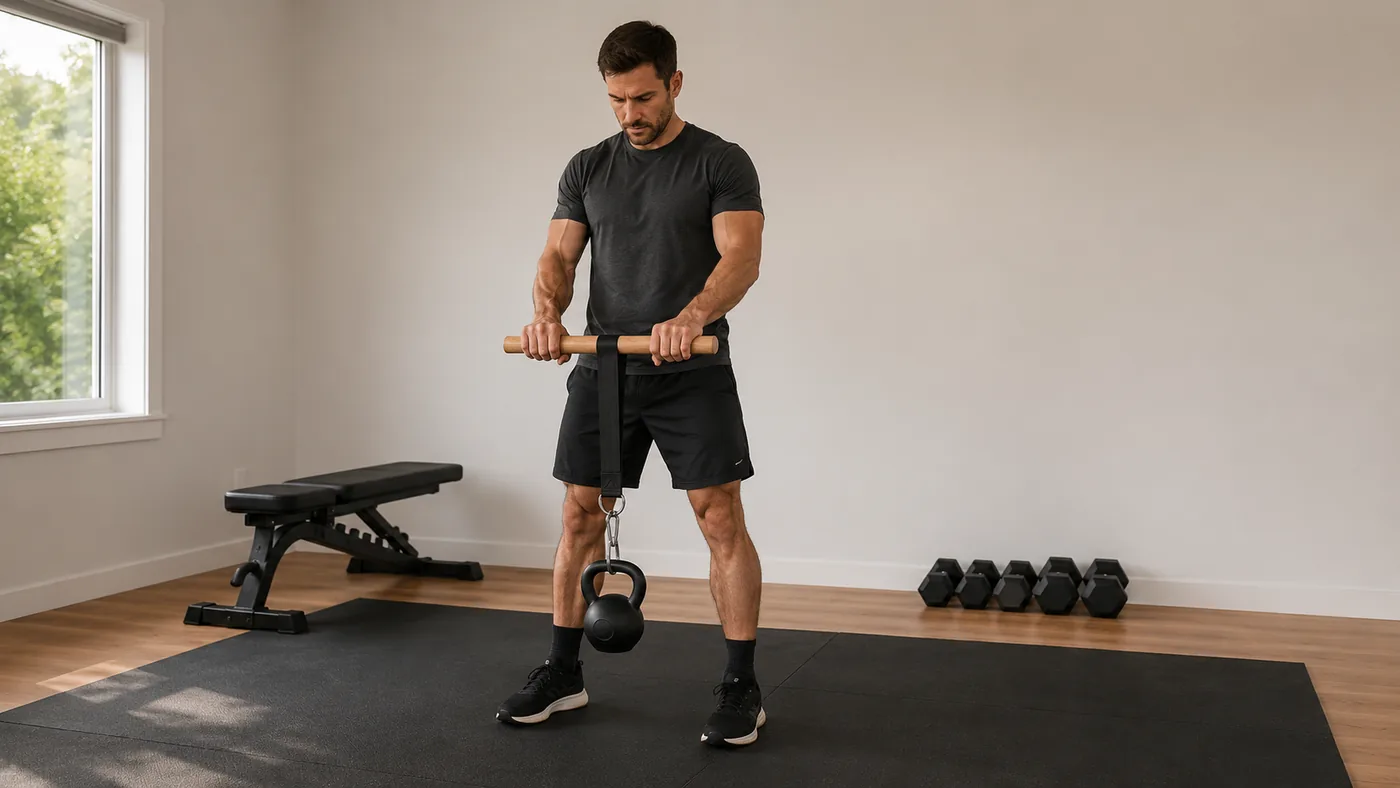
The obvious one is that it goes everywhere. The whole tool is a 15.7 in (40 cm) wooden bar and a strap, so it works in a garage, a hotel room or a corner of a gym with nothing free but floor space. No rack means no waiting for a rack, which on a busy evening is the difference between training forearms and skipping them.
The less obvious one is that the shoulder work is a feature for some people. Holding a load at arm's length for a full minute is genuine anterior deltoid endurance, and if you play a sport that asks you to hold something out in front of you, that is training you would otherwise have to add separately. The athletes in our carryover breakdown mostly want both qualities anyway.
And there is a simplicity argument. Free-hanging has no setup step, so nothing about it can be set up wrong. No pin height to judge, no clearance to check, no bar to keep centred on supports. Pick it up, load it, roll.
You do not need a bolt-in roller to train in a rack
This is the part the search term obscures. Because some rollers are sold as fixed rack attachments, people assume rack rolling requires buying a second, permanently mounted tool. It does not. A roller with a strap and a carabiner rests in a rack perfectly well, then comes back out and goes in a drawer.
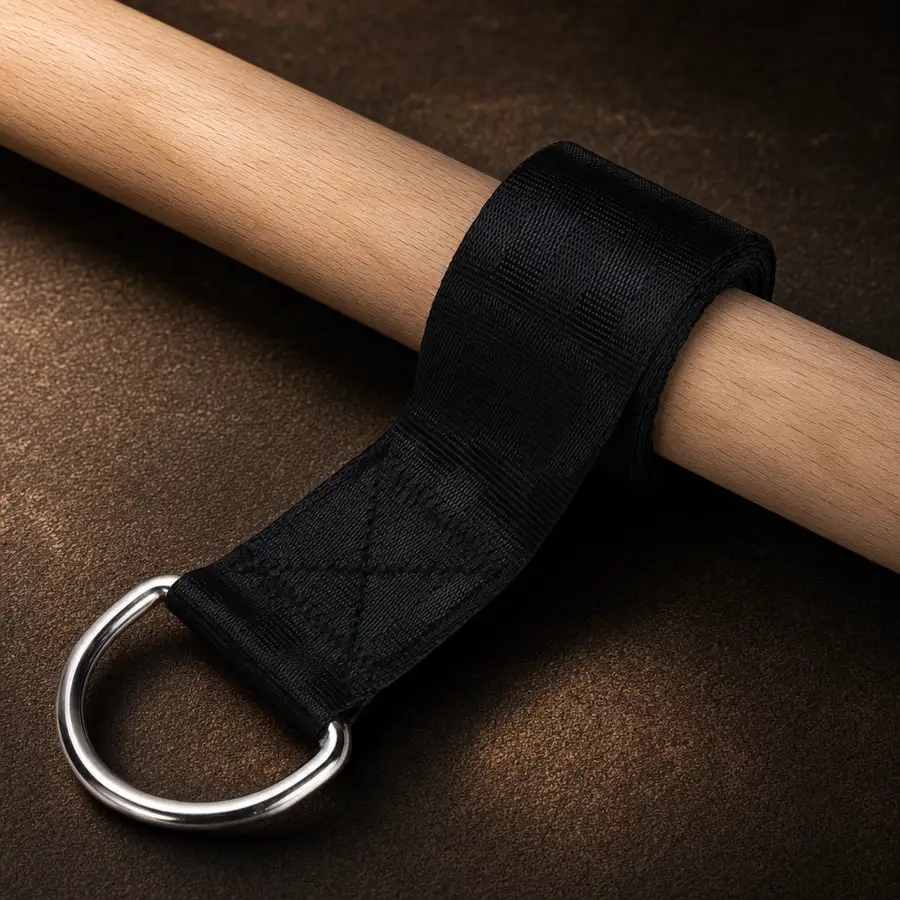
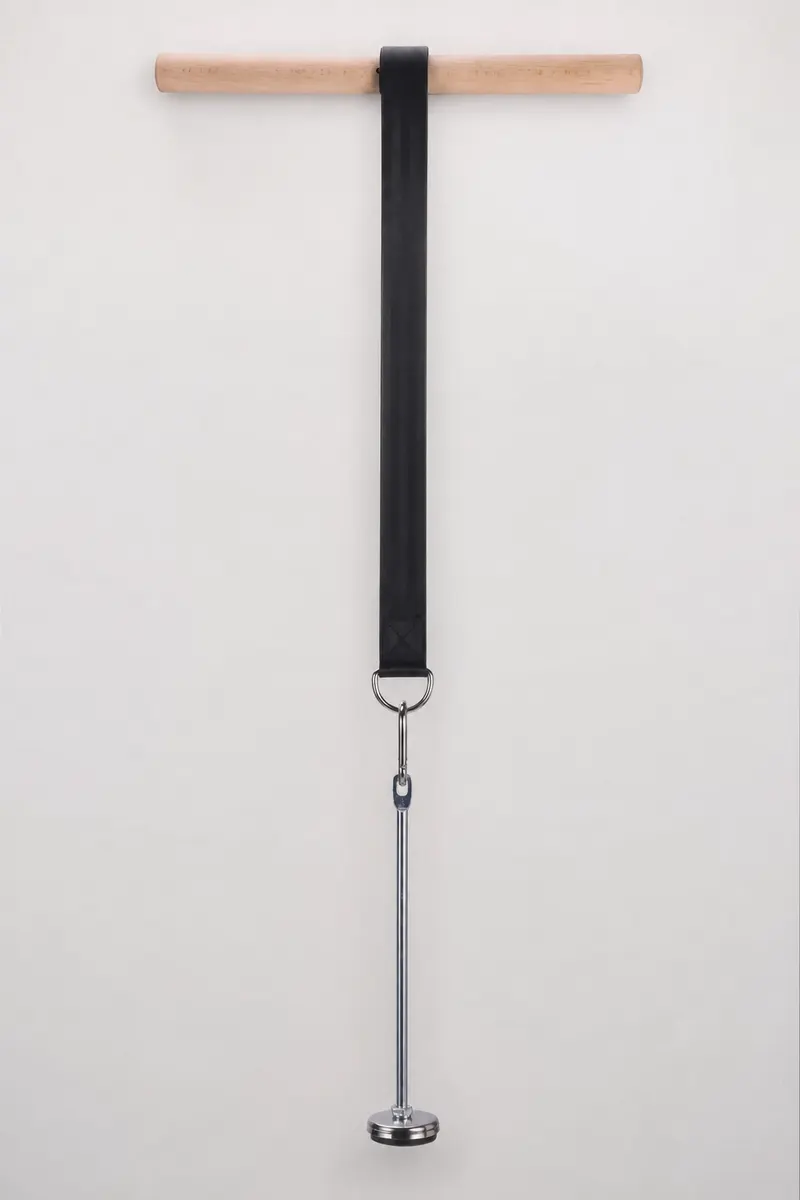
What makes that work is the attachment. On our roller the strap is a cross-stitched loop that slides over the bar rather than passing through a drilled hole, and the load hangs from a steel carabiner rather than a knot. The loop stays put under load and lets the bar turn inside it, which is exactly the behaviour a supported bar needs, and there is no hardware to bolt to anything. One solid 15.7 in (40 cm) handle, no hole through the middle, no mounting kit, and it stores in a gym bag between sessions.
The practical version of all this: the same $29.95 roller does both stations, so you never have to pick one at the moment of buying. Roll it in the rack on the days you want the strictest forearm work, hold it at arm's length on the days the rack is busy or you are nowhere near one.
Working both stations into your week
You do not have to choose permanently, and the sensible programme uses each for what it does best. A workable pattern is to run your heavier, strictest rolling supported in the rack, and keep a lighter free-hanging session for the day you train somewhere else. The load will be different between the two, and it should be.
Two loaded sessions a week is the dose that builds, and forearms follow the same rule as everything else: the U.S. Physical Activity Guidelines (HHS, 2018) put the floor at 2 muscle-strengthening days per week. The three structures in our workout routines drop straight into either station, because sets, reps and progression do not care where the bar is resting.
Where it sits inside the session matters too, and the answer is the same at both stations: last. Rolling leaves your grip temporarily useless for anything else, so a set placed before your pulling work quietly costs you reps on the lift you actually came for. Put it at the end, when nothing after it depends on your hands still closing. The one exception is a deliberately light free-hanging set used as a wrist warm-up, which is a different job at a different load.
Track the station alongside the load in whatever note you keep. A 15 lb supported set and a 15 lb standing set are not the same session, and a log that records only the number will have you concluding you stalled when you actually changed the exercise.
Which one to start with
Start free-hanging with your elbows tucked, whatever equipment you have access to. It teaches you the rotation and the slow unwind with nothing to set up, and it shows you where your forearm endurance currently sits. Once full slow rolls feel controlled and you find your shoulders quitting before your forearms do, that is the signal to move a working set into the rack and let the forearms finish the job.
For long-term payoff, the station matters far less than the habit. In the PURE study of 139,691 adults (The Lancet, 2015), each 5 kg (11 lb) of grip strength difference was associated with a 16% difference in all-cause mortality risk. Whether the bar rested on a pair of safeties or hung from your own arms will not show up in that number. Rolling twice a week for a year will.